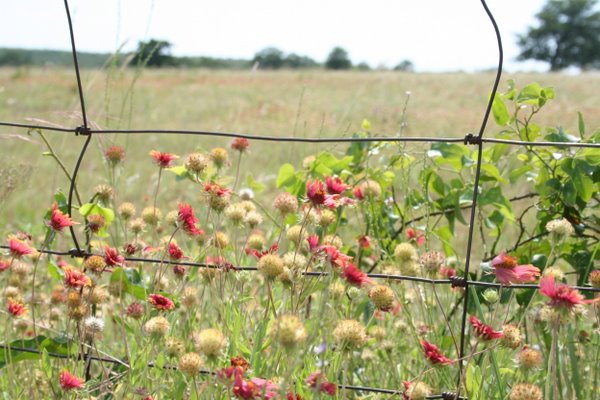
Monday, August 25, 2008

The Womb of God

One of my favorite biblical authors is Abraham Heschel who, in 1962, wrote the definitive book on the prophets, called The Prophets. He described the time period around 400-500 B.C. when some of the great Old Testament prophets had begun to write and speak in alarming, revolutionary, and largely unlistened-to ways (I’m going to paraphrase just a little, because his words can be difficult at times):

Heschel wrote of that time- “Religion had declined not because it had been successfully argued against, but because it had become irrelevant, dull, oppressive, uninteresting. When faith is replaced by creed, worship by discipline, love by habit; when the crises of today are ignored because of the remembered splendor of the past; when faith becomes an inherited heirloom rather than a living fountain; when religion speaks only in the name of authority and rules rather than the voice of compassion, its message becomes meaningless.”

Part of my personality- my vision of the world, the universe, God, and all things and beings contained therein- is summarized in that statement. I listen to and read other preachers, so many other Christian teachers and thinkers, and I end up feeling lonely sometimes, embarrassed even because what I see and believe seems so different from what I hear being proclaimed as God’s Truth, God’s Word by almost everyone else, including many of my own denominational colleagues. And that sometimes leads to a kind of situational depression on my part. I wonder if I am wrong, and if I am even being fair in sharing some of my deepest insights and doubts and wonderings with you because they so often seem to run counter to what is considered orthodox and traditional in Christian thinking and doctrine.

That is this preacher’s burden. Robbie, primarily, and some others of you catch the brunt of that odd depression from time to time, maybe too often. But I hope all of you also hear and feel- underlying that confusion and what is a very real sadness at times- I hope you also hear a real hopefulness on my part. I don’t believe Jesus intended to lead us in circles around and around in 2000 year old cultural realities and perceptions. In fact, I think that following Jesus is God’s way of leading all people, in all times, out of the Bronze Age that religion had irrelevantly, dully, oppressively, and uninterestingly become stuck in, and into an always-being-made-new Creation.

~~

I sit by the ocean watching the waves in early morning moonlight and think about these things. I walk beside the evening’s incoming tide, watching the records of that Creation in the scampering of sandpipers and the 200 million year old ballet of pelicans. I stand on Carolinian sand dunes blown into existence by winds which blew across the continents of Africa and South America long before there was a human present to scratch boundaries of ownership across them. Around me are pairs of ragged claws, as T.S. Eliot called them, crabs scuttling in and out of their ancient habitats, in and out of holes dug among the tangle of vines, the cacti, the wildflowers, and the swaying salt marsh grasses.

One morning, as I am making what is for me a jaw-dropping discovery that the horizon is not a perfectly straight line, but a series of barely discernible ups and downs of tidal risings and forming waves, like letters, words, and sentences- a kind of oceanic story being written in circles around the globe, and on that morning that story is punctuated a mile offshore with two large spouts of water. A whale.

That same morning, a little later, dolphins- 3 of them- appear near my son and daughter and others, ten yards away, jumping from the water in perfect, almost friendly formation. Then, later that same day, two sharks- small ones- appear just beside the shore, gulping the small fish caught in a temporary lagoon caused by receding tides. Those who are swimming leave the water quickly, but are unable to stop watching this scene, an unchanging scene, a wild and eternal scene older even than the time of dinosaurs.

I watch episodes like these shoulder-deep in the water, or from my sandy seat atop a dune, or hunkered down beside the water’s edges where waves born in the meeting of Caribbean currents and sub-Saharan winds are wetting my feet as my toes curl into the million and millions of tiny worn shards of ancient shellfish, now grains of sand. Other shells lie all around me, saltwater shelters abandoned by ten thousands of mollusks and crabs, shells which one day, wave after wave after wave away, will also be pummeled into the granular debris of other beaches, other shores.

I am caught up again and again in the transcendence of moments and minutes, of time and eternities. All that is around me on this shore- on any shore, and on beyond these shores to the mountains far behind me and the plains and rivers and lakes and fields beyond; all that is around me, beside and behind me, over me and under me, from the verdant green of every flower, to the forests of trees beyond them in the Great Smoky mountains, from those creatures in the seas which are too small to be seen, to sharks and whales, to crabs and the pelicans, the gulls and sandpipers, to each and every animal that burrows, flies, swims, crawls, slithers, or hunkers down near the waves watching it all- all of it, all of them, emerged in their primary, first forms from the ocean. Life- all life- has been born in these salty wet depths. All life has surged upward and outward and forward from this womb of God, this birthplace of an always new Creation.

Above me, and I cannot look elsewhere now, the morning sun is rising between scattered gray, yellow, and white clouds moving from east to west in massive air currents I cannot feel, but only see. Clouds formed by the endless evaporation of water from the ocean’s surface in response to the 10 billion year old sun’s invitation to rise toward its light and warmth. Clouds which, when laden with the many tons of hydrogen and oxygen atoms formed into molecules of water, attracting each other, joining together and spilling in heavier-than-air raindrops on the lands over which they pass. Gentle spring rains or summertime deluges, the ocean pours through them onto lands beyond, where the grasses absorb them and grow. And then the oceans are eaten in their now green and leafy incarnations by cows. And dairy farmers gather the now milky white drops of the ocean together into pasteurization vats and stainless steel tank trucks, some of which, not far away, will be made into ice cream.

Lick the ice cream and savor the ocean’s journey onto your lips. Taste the ocean’s always new and endless Creation on your tongue. We are a part of it. It is a part of us. The boundaries of difference among living things are blurred and obscured by the commonalities of our origins. Our own saltwatery blood pulses in rhythms begun by the oceans and the moon in gravitational, tidal dances, and I am overcome, again. I put my earphones on and listen to the Leonard Cohen song “Hallelujah” as I watch and wonder in gratitude and humility and I raise my arms in the same form in which I earlier saw the whale’s spouts, and I listen, and I try to sing, because I must. I must.

It goes like this
The fourth, the fifth
The minor fall, the major lift
The baffled king composing Hallelujah
Hallelujah
Hallelujah
Hallelujah
Hallelujah

When I come back up to the house and onto the porch my son and his girlfriend are sitting there drinking coffee and Joshua asks me, with a tinge of worry, I can tell- “Daddy, what in the heck were you doing down there?” (I didn’t think anybody would be out of bed yet!) “What in the heck were you doing down there with your arms in the air?”

And I tell him, “Becoming sane.”

~~

Psalm 24:

1 The earth is the LORD's, and the fullness thereof, and all who live in it;

2 for he founded it upon the seas
and established it upon the waters.

I need those words. I need those words to wash over the curse of my own jabbering ego; I need those words to clean and scour the false priorities I schedule for myself constantly. I need those words, in waves crashing against my pride, I need those words to remind me that, at the bottom of everything I am nothing, but that me and you and every living thing are a part of the whole of everything. We are the intricately, intimately related parts of the earth’s fullness thereof. And we are loved very, very, very, very, very, very, very much.

Matthew 5 from ‘the Message’, verse 3: "You're blessed when you're at the end of your rope. With less of you there is more of God and his rule.

4"You're blessed when you feel you've lost what is most dear to you. Only then can you be embraced by the One most dear to you.

5"You're blessed when you're content with just who you are—no more, no less. That's the moment you find yourselves proud owners of everything that can't be bought.

6"You're blessed when you've worked up a good appetite for God. He's food and drink in the best meal you'll ever eat.

7"You're blessed when you care. At the moment of being 'care-full,' you find yourselves cared for.

8"You're blessed when you get your inside world—your mind and heart—put right. Then you can see God in the outside world.

Here’s the truth the ocean was drowning me in that morning, and during those days there. Here’s what I can see so much more clearly now- what Jesus is able to lead me, and all of us toward, if we are following him.

Continuing in Matthew 5, verse 13: "David, Let me tell you why you are here. (No, my name is not really there. But there’s a white space there- insert your own name in it!) David, let me tell you why you are here. (Do it, let Jesus talk to you here) David, ___, ___, ___, ___, ___, let me tell you why you are here. You're here to be salt-seasoning that brings out the God-flavors of this earth. If you lose your saltiness, how will people taste godliness? You've lost your usefulness and will end up in the garbage.

Verses14-16: "Here's another way to put it: You're here to be light, bringing out the God-colors in the world. God is not a secret to be kept. We're going public with this, as public as a city on a hill. If I make you light-bearers, you don't think I'm going to hide you under a bucket, do you? I'm putting you on a light stand. Now that I've put you there on a hilltop, on a light stand—shine! Keep open house; be generous with your lives. By opening up to others, you'll prompt people to open up with God, this generous Father in heaven.

So, I cannot be quiet. I dare not be quiet. If I feel the saltwater kiss of God on my lips, what else can I do but share that caress in these ways available to me, with you? I must continue to shout that I can learn almost as much about God from a wildflower field as I can from the first chapter of John. I must admit without embarrassment that I learn as much about the active presence of Jesus in a roomful of sentenced-to-life convicts as I do from the letters of Paul.

And I must stop being ashamed or otherwise discombobulated, when I tell you or others, or even admit to myself that an hour beside the ocean, lost in the eternal mysteries of blue-green waters tinged with golden sunlight, is better than any sermon, any day. Even this one.

So, on a gray Friday morning a week ago, August 15, the day after Sarah and Travis’ wedding, I got up, almost as usual before everyone else, walked down the catwalk across the dunes, sat on the last step, and wrote what follows. I didn’t know then if I would ever share it with anyone. Having read these words of Jesus just now, though, I know that I must:


Abba, Father..

Through the smallness of my words, I cannot explain to anyone, least of all to myself, who or what you are.

Through the inadequacies of language and grammar, whatever I write leaves so much unwritten that it might be better to tear this blank page into a thousand pieces, lift them to the wind and, as they are blown across the beach say “There, there is God.”

But if I don’t write something, right now, I might cease to breathe.

I know that Genesis says humans were created in the image of God, but I think we have done a much better job of recreating God in our own image. I would rather watch the image of God I see in these pelicans, or in these scampering sandpipers, than think about the image of God which fueled the hundreds of slave ships which crossed these waters in front of me.

My heart soars as I watch the image of God in this rising sun, and know what the ancient biblical writers could not have known: that this is one of a trillion sun-stars, and a fairly minor sized one at that. I see God better in the golden explosion of these early morning, sun-reflecting clouds better- infinitely better- than I do when I read the church-blessed history of the “godly” men who came to these shores 400 years ago with ships full of guns, germs, and plans to baptize and bless the “savages” who had lived here 6000 years on land they called “Father” near the waters they called “Mother.”

My heart aches as I think about the Japanese trawlers chasing down with high powered, 21st century harpoons the whale I saw yesterday, because a Japanese god wants whale oil burning in his temples. And my heart breaks when I think of the creature-killing weapons-testing happening beneath these waters because an American god says “My country, right or wrong, my country.”

It is the man-created images of God which infect my soul, not this billions year old image in front of me! The truest maps of creation are written on the backs of these seabirds, and in the God-writ words on the horizon. I can taste God here in the spray of saltwater. I can hear God in the symphonies of the sun and moon and the harmonies of the ceaseless waves. I can see God in paths of crabs and the nests of sea turtles. And I can touch God here, simply by lifting my hands.

Hallelujah!

Tuesday, January 1, 2008

No Beginnings, No Endings: God

John 1: 1-5 “In the beginning was the Word, and the Word was with God and the Word was God. He was in the beginning with God. All things came into being through him, and without him not one thing came into being. What has come into being in him was life, and the life was the light of all people. The light shines in the darkness, and the darkness did not overcome it.”

The Greek word which was translated as The Word in this well-known passage from the gospel of John is Logos: In the beginning was the Logos, and the Logos was with God and the Logos was God. The Greeks understood Logos to be the underlying grid, the foundations from which everything came into being. They did not know about or understand specifically what those foundations were- there were no Periodic Charts of the Elements in existence yet; Einstein’s theories of gravity and relationship in the universe were still 3000 years away. So they used a general term for the God, or gods- the forces behind everything, that caused everything to be.

John gave the Logos, the Word, a name. He identified Jesus as the underlying everything, the foundation of all that was, is, and will be: “All things came into being through him, and without him not one thing came into being.” And he then, even more specifically, identified what it was that had come into being through Jesus- Life! “And Life was the Light of all people.

Nothing that John has just written about Jesus would have contradicted a single Greek notion about Logos. In this way, John was cleverly associating Jesus, a brand new person who was being introduced to the world, with Logos, an ancient concept already understood by most of the Mediterranean world.

Logos is eternal. Light is always moving outward. And Life goes on. Jesus, John says, is all of those things: an eternal Light, who is the author and sustainer of Life.

Today is the next to the last day of 2007- December 30, 2007: two days before January 1, 2008. A calendar year is ending as a new calendar is about to begin. Today is last Sunday of 2007. Next Sunday will be the first Sunday of 2008. It is now 11:40 a.m. Almost noon- the end of morning, the beginning of the afternoon- halfway through the day.

Let’s do something here for a little while. Let’s put aside all of these artificial, humanly- designed ways of chopping up time into comprehensible little chunks and try for a little while to think, not about time, but about eternity. Let’s try- and that’s all we can do- but let’s try to think not about beginnings and endings, but about the Logos, the Word of God, Light, and Life.

Here’s where we start:

*tear up a 2008 calendar*

*smash a watch*

There are no more days, minutes, months, hours, years, seconds, or even eras or decades. There is Light and there is Life. And there is God, before and after all of it. What we have thought of as beginning has always been. And what we think will be ending, will always be.

Now, before you think I have lost my mind in abstract thinking, let me read to you one of my favorite verses in the New Testament, from Revelation 22, verses 1 and 2. An angel shows John a vision of what Life- God life, eternal Life- is really like. And it is not about calendars and minute hands. Here’s what John sees:

Then the angel showed me the river of the water of life, as clear as crystal, flowing from the throne of God and of the Lamb down the middle of the great street of the city. On each side of the river stood the tree of life, bearing twelve crops of fruit, yielding its fruit every month. And the leaves of the tree are for the healing of the nations.

Life is like water in a river, flowing from the throne of God through the very center of the city. We can name a river, we can even draw it on a map, but we can never see the same river twice. A river is always changing. The water moving in front of us is not the same water that moved by us yesterday or even two seconds ago. Sneeze, focus again, and there is yet another new river to behold, and there, there, there another and another and another. Even the banks of the river are slowly, all the time, changing. Maps of rivers always need redrawn; banks wash away, the river changes course, lakes are formed, and silt from upriver creates new obstacles and courses.

No one looks at a river today and feels sad because it is not the same water that was there yesterday. In fact, something wonderful is happening that should cause us from feeling anything but sad. Much of the water that ran by us yesterday in the river is now gathering about us in the form of clouds- evaporated water. Somewhere downwind, that evaporated river water will be heavy enough to begin to fall down from the sky and it will rain on a field, where dairy cows will eat the grass the rain is absorbed into. The cows will produce milk. The milk will be hauled to the creamery and some of it will be made into ice cream.

We can stand by the river today, in other words, and enjoy the rivers of yesterday on our tongues. Vanilla, strawberry, butter pecan- the yesterday river is still alive, not only giving us Life, but enhancing our Life.

Where did the ice cream begin? In fact, it has always been. Ever since the crashing of hydrogen clouds 13 billion years ago against the hot gases of a dying star, the water has always been present. And whether it is an ocean, a river, a cloud, rain, grass, milk, or ice cream, it always will be.

As we are part of that river of life, flowing from the throne room of God, we can also see ourselves- or, at least, begin to see ourselves- in an eternal context too. Our lives are no more static than the river itself. Who we are today is not at all who we were yesterday. I look at a picture of myself when I was 16 years old: is that me? In calendar language, in the language of social security numbers and permanent records- that’s me, yes. But I look at this and see only part of who I am today. There are eight more years of school, a wife; three kids who wear carry part of my heart around with them all the time. There are sad years in there that I don’t even want to think about, but have to. There have been about 5000 times of laughing so hard I could barely breathe! I’ve lived in 13 different homes, in 8 different towns in 2 other states since then. I’ve cried over the deaths of people I’ve loved that I didn’t even know then, back then when death was still so abstract and far away as to seem impossible. I have voted for both George McGovern and for Ronald Reagan. There were years in there where I despised the very idea of God, and I’m just about ready to finish off paying for 10 years of seminary debt caused by falling in with love God. Am I looking at me in this picture? Or am I looking at someone who is still swimming, and will be swimming for eternity, in the river of life?

And it’s a river, a blessed river without beginning and without end, that we are all a part of. It flows from God and runs directly under the Tree of Life..that’s what John saw! A tree that bears twelve seasons of fruit..life-giving sustenance, fruit to nourish the body and the soul, food to feed the mind and the heart. We are being produced, made better and better by this tree, this tree of life that grows over the river of God. A tree, the leaves of which are for the healing of the nations..

What could this tree of Life be that John is seeing? What is it, who is it, that produces fruit that both nourishes and heals? Who is it, that told his disciples he was the yesterday, today, and forever, and would never leave them or forsake them and who went ahead of them to prepare a room for them in his father’s home, and who is the only beginning and the only end of all things?

It is the tree that gives Light, and the Light that gives Life. It is Jesus, the author, and the finisher of our faith. He is the colors in which we are being painted; he is the music which allows us to sing. His are the leaves which flow in the river with us, into the bays, into the oceans of the world..we are his and he is ours..

Therefore, what I am saying this morning is this: The calendars and wristwatches of our lives are not what our lives are about. We are not a mere series of actions leading to some future event. We are here now, in these moments, part of an ever-changing, always different river of Life. The leaves that are dropping around us from the Tree of Life are not the same leaves that fell yesterday, or the same ones that will fall tomorrow. The messages of God for us right now should not be missed because we are focused on appointment next week, or an anniversary next year. The colors and sounds of today are unique, blessed, and special. This part of the river will never be the same again. Jesus was..is..the Logos, the Word that brought Light and Life to the world. As followers of Jesus, as those passing this moment beneath his Tree of life, we are a part now, too, of the beginnings of everything from this minute forward. Each of us, no more, no less than anyone else, or anything else, are parts- vital parts of the Great Story of this day which will remain forever as chapters in the Great Stories of eternity.

We are part of the flow that began in the throneroom of God, and which now flows into the unending reaches of the universe. The Tree of Life gives us comfort and shade, and the leaves of the Tree of Life give us meaning. All of them are important. And everything from this moment onward is dependent on our being awake to them.

e.e. cummings, one of the great American poets of the last century, is a part of those leaves dropping around each of us right now. I think these words about God are as important as John’s. Catch hold of them, right now, as we pass by in this part of God’s river:

i am a little church (no great cathedral)


i am a little church(no great cathedral)
far from the splendor and squalor of hurrying cities
-i do not worry if briefer days grow briefest,
i am not sorry when sun and rain make april

my life is the life of the reaper and the sower;
my prayers are prayers of earth's own clumsily striving
(finding and losing and laughing and crying)children
whose any sadness or joy is my grief or my gladness

around me surges a miracle of unceasing
birth and glory and death and resurrection:
over my sleeping self float flaming symbols
of hope,and i wake to a perfect patience of mountains

i am a little church(far from the frantic
world with its rapture and anguish)at peace with nature
-i do not worry if longer nights grow longest;
i am not sorry when silence becomes singing

winter by spring,i lift my diminutive spire to
merciful Him Whose only now is forever:
standing erect in the deathless truth of His presence
(welcoming humbly His light and proudly His darkness)

Amen

(With thanks to e.e.cummings and Thich Nhat Hahn)


Christmas Eve, 2007

We step into Christmas Eve with some trepidation. It’s kind of a time machine in which many of the Christmas times of the past are telescoped into the present and we are looking backwards as often on a day like this as much as we are looking around and forward.

For some this year, there is the question of what to do with that empty chair at the table- the one where he always sat, or from where she said the grace last year. For others, it may feel to them like they’re peeping toms, standing on their tiptoes looking through the windows of others at how they hoped life might have been, but never really was. And for some there is the difficult wondering that never stops but which seems to peak especially sharply this time of year: Where is she now? Is he happy? Do they remember me? Is everything OK there?

Our thoughts return home on Christmas Eve, and for many that’s a blessing but for many it is only a vague and fuzzy concept that derives more from the The Walton’s Christmas Special or a Hallmark television drama, than from warm recollections of their own. They might remember how good the pie was at Aunt Nettie’s house, but then there was the drive home that night and that terrible fight in the kitchen that seemed to go on and on.

The money is being squeezed to the choking point, and some are sitting here right now remembering the one thing they meant to do and did not get done or the two or three things, and you don’t have to be sitting to feel that kind of pressure, either. You can be standing right here and feel it, too.

Outside of here, far away in geographical distances but about a half inch away emotionally for some, there are wars and rumors of wars. We all have triangle folded flags poking at our fears or our memories and we’ll just have to put off thinking about that lab report, or that grade report, or the job performance review, and the letter from the IRS, the VA, and the mortgage company..tomorrow, or the next day.

Time telescopes from the past to the present and it feels like tomorrow may never be as bright as we want it to be or remember it being.

None of us faces this dilemma, this tension, alone however. We all share it: the tallest among us, the shortest among us; male, female, the nationality, the race, even the economic condition doesn’t really matter. We are all in the same little boat, crossing an ocean of life that is sometimes stormy, sometimes downright frightening. We are making our ways the best ways we can, the best ways we know how, but there is, with all humans, the deep feeling that there must be, has to be, something more.

There is something else we want, something we share with every other person, every other living being. Rumi, the 13th century poet, called it “The Kiss”- the Kiss we want:

There is some kiss we want with

our whole lives, the touch of

spirit on the body. Seawater

begs the pearl to break its shell.

And the lily, how passionately

it needs some wild darling!

The Kiss we want..like a mother’s kiss that will fix it where we hurt ourselves. But more.

Like the touch of someone we love..the assurance that we are not alone. But more.

Like the embrace of father, who tells us everything will be all right. But more, even more than that.

The kiss we want, I believe, is precisely the reason we have gathered together this evening. No matter how we came here, as families, as individuals, because Mom said you had to be here or because there is no other place you could imagine being on Christmas Eve.. what we have gathered here for this night is to remember and receive, again, the Kiss we want, the kiss we have longed for, the kiss of God on all humanity.

That is who Jesus is. That is precisely the reason, I maintain, for his birth. There are theological, philosophical, and historical explanations for Jesus, God’s Word made flesh and dwelling among us..thousands of books full of those commentaries, definitions, and explanations. We can study them for a lifetime!

Or, we can accept the Kiss. Jesus- the Kiss of God for all of humanity- past, present, and future. And Jesus, the Kiss of God on the cheek of each person here as well. That’s what this baby was.

Jesus was the affirmation of what God said when he formed the world and said, “That’s good.”

Kiss. It still is.

Jesus was the assurance from God that we are not alone, never alone.

Kiss. He is with us now.

Jesus was God’s whisper, the whisper of a Daddy, that everything will, really will, be all right.

Kiss. It is what we have longed for. It is what we want.

God’s gift for all of humanity, for me, for you, was not an esoteric text. It was not a sacred relic to be worn around the neck or a place to make a pilgrimage to. It was not faraway, difficult to grasp, or hard to understand. It wasn’t a set of rules, there was nothing to memorize or agonize over.

God’s gift was a touch, his flesh to our own. His love co-mingled with ours in the manger of a new creation. His trust that we would embrace his son as he had embraced us.

“Today in the town of David a Savior has been born to you; he is Christ the Lord. This will be a sign to you: You will find a baby wrapped in cloths and lying in a manger."

A sign to the shepherds, to you, to me, to everyone who would look past themselves and into the face of God himself- one of us. A sign for all the world of peace that is possible, joy that is real, and hope that is always present. A sign of Light, understanding and trust, first in the darkness of a stable, but radiating outward through time into the dark corners of our own fears.

A sign to the shepherds, to you, to me..the kiss that we want. The kiss we have longed for.

“Unto us a son is born, unto us a child is given.”

Lean down now, against the soft cheek of a baby, lean down now and receive the kiss of our Savior.

Let us pray:

Into our lives, God, you have been born. Into our hearts, Father, you have been given. On this night that we remember the gift of yourself to a world that needs you, we acknowledge and are thankful for your love for us, for each of us. May others experience through us, the manger of new beginnings. May we, too, be ready always to share the kiss we have been given, with all of Creation.

(with thanks to Rumi, Barbara Brown Taylor, and Walter Bruegemann)

Monday, December 10, 2007

The Journey

Matthew 1: A record of the genealogy of Jesus Christ the son of David, the son of Abraham:
2Abraham was the father of Isaac,
Isaac the father of Jacob,
Jacob the father of Judah and his brothers,
3Judah the father of Perez and Zerah, whose mother was Tamar,
Perez the father of Hezron,
Hezron the father of Ram,
4Ram the father of Amminadab,
Amminadab the father of Nahshon,
Nahshon the father of Salmon,
5Salmon the father of Boaz, whose mother was Rahab,
Boaz the father of Obed, whose mother was Ruth,
Obed the father of Jesse,
6and Jesse the father of King David.
David was the father of Solomon, whose mother had been Uriah's wife,
7Solomon the father of Rehoboam,
Rehoboam the father of Abijah….

Blah blah blah blah blah…

It is not wrong, I don’t think, to maybe expect the story the story of Jesus Christ, son of God, savior of the world, to start off with just a little bit more of a bang, is it? These are the first words of the New Testament, and as dull as they may at first glance be, they are important. Because they are about a journey through time that will, 28 generations after Solomon, begin to converge in a whole series of journeys across time and geography- journeys that include the chapters of our own lives right here, right now.

The genealogy I just read covered 14 generations, from Abraham through Solomon- about 700 years. Another 14 generations would take the genealogy of Jesus into the time of Israel’s captivity in Babylon. And then another 14 generations later, a total now of almost 2500 years from the time of Abraham, the birth of Jesus would happen. It was 2500 years of Jewish history in the making, and it’s been 2000 years of world history in the remembering. How well, or how not well we’ve done our part- the remembering- is what we’ll talk about today.

But first, buried within that seemingly dull list of names, there were four surprises, planted there by Matthew like warning flags to tell his readers that what they would be reading was going to be a very unusual story. Normally, a Jewish genealogy was about one thing- the line of patriarchs- the honorable and pious men who passed on their legacy- I guess- in spite of all the women in the way.

Now, the surprises placed in this family tree, however, were exactly that- women! Something had happened in the mind of some very Jewish, culturally patriarchical men like Matthew, that had caused them to open their eyes wider than they had even been before. Something had caused Matthew to acknowledge the personhood, the importance of women at a time when that just wasn’t done. There was no reason to, after all! Women weren’t men, and the thinking of the time, men were what mattered. Men, and the number of donkeys they owned.

So when Matthew sneaks the names of Tamar and Rahab, prostitutes, and Ruth, a conniver, and Bathsheba, a woman who took baths on her roof in full view of King David..when Matthew makes sure the reader knows that Jesus has these women’s blood pulsing through his veins, Matthew is saying, without shouting it, that everything, as it has been known, was being turned upside down.

The doors to a relationship with God, being a co-creator with God in the Kingdom of God, had just been opened a whole lot wider than they had ever been before.

When he’s done with that blockbuster of a genealogy, then, Matthew begins to show us exactly how upside down things were about to become.

Verse 18: This is how the birth of Jesus Christ came about: His mother Mary was pledged to be married to Joseph, but before they came together, she was found to be with child through the Holy Spirit. 19Because Joseph her husband was a righteous man and did not want to expose her to public disgrace, he had in mind to divorce her quietly.

20But after he had considered this, an angel of the Lord appeared to him in a dream and said, "Joseph son of David, do not be afraid to take Mary home as your wife, because what is conceived in her is from the Holy Spirit. 21She will give birth to a son, and you are to give him the name Jesus, because he will save his people from their sins."

Verse 24: When Joseph woke up, he did what the angel of the Lord had commanded him and took Mary home as his wife. 25But he had no union with her until she gave birth to a son. And he gave him the name Jesus.

Another journey; a nine month physical and emotional journey for two, then three people. Two obscure young people, related to King David to be sure, but just as related all kinds of others through time as well: two obscure young people who would have lived their lives in continuing obscurity had they not taken the necessary, government ordered journey to Jerusalem, then arrived at that place where they could look down at the baby in front of them and say, “Jesus.”

Then another journey, the first of untold thousands of geographical journeys that have been undertaken throughout history because that couple in time, and because of that baby in a manger:

Chapter 2, verse1: After Jesus was born in Bethlehem in Judea, during the time of King Herod, Magi[a] from the east came to Jerusalem and asked, "Where is the one who has been born king of the Jews? We saw his star in the east[b] and have come to worship him."

When King Herod heard this he was disturbed, and all Jerusalem with him. 4When he had called together all the people's chief priests and teachers of the law, he asked them where the Christ[c] was to be born. "In Bethlehem in Judea," they replied.
Verse 7: Then Herod called the Magi secretly and found out from them the exact time the star had appeared. He sent them to Bethlehem and said, "Go and make a careful search for the child. As soon as you find him, report to me, so that I too may go and worship him."

After they had heard the king, they went on their way, and the star they had seen in the east[e] went ahead of them until it stopped over the place where the child was. 10When they saw the star, they were overjoyed. 11On coming to the house, they saw the child with his mother Mary, and they bowed down and worshiped him. Then they opened their treasures and presented him with gifts of gold and of incense and of myrrh. 12And having been warned in a dream not to go back to Herod, they returned to their country by another route.

The wise men ended up taking another route home. They followed a star, they journeyed, they found the child, they worshipped, and they knew they could not return home the way they’d come.

There are those times when we too, like the Magi, encounter the Living Christ, in the flesh, unencumbered by the rules and doctrines of other humans. While we were at Capstone (fictitious name, as are almost all names to follow) in the Metroplex- and I’m going to bring up one of the best series of memories that I know Robbie and Mike and Christy and I have of our time there- I hope I can begin to describe it adequately for everyone- while we were there, there were two group homes that were a regular part of the congregation. One was a group of 8 men, and the other was a mixed group of men and women, all profoundly mentally and/or physically challenged.

When we combined the two churches there- ------- and St. ----’s- to form Capstone, we brought the 2 groups from the smaller ------- to St.----’s. You may remember that I told you the Superintendent assigned me to ------- because, he said, they were all lovable misfits, and that I would fit right in. I don’t know what the thinking was when I was assigned to here- whatever it was, I’m glad it happened. But I digress, as happens..

The group homes had been to three other churches in the area in their journey to find a Sunday morning place of worship for these special people. “Our doors aren’t wide enough for the wheelchairs,” they were told, or “We’re afraid the noisiness of these people would be upsetting, and our cry room isn’t large enough to hold all of them.” All kinds of reasons why these children of God would not be welcome, until they came to ---------- one Sunday morning, and the “misfit” who was greeting people at the door said, “Why not?”

It was a glorious relationship. The group homes would always arrive late. It didn’t matter, no matter where we were in the service, the greeter would come in and announce, “they’re here” and 8 wheelchair helpers- little kids, choir members, even some of the older people who had trouble walking themselves, would get up and go outside to help them in. They became a part of fellowship meals- some needed to be fed- and there was even a special confirmation class for some of them, so they would full-fledged members of the United Methodist Church.

Why was all this effort made? You’ll see in a minute. Because the journey of these group homes became the journey of a church.

When -------, and it’s people moved to the larger, less mis-fitting, St.----’s, there were some problems over our friends. One suggestion, made early on, was that the church would take out the two back pews so they could all sit together in the back of the church. In one of the only times anyone there saw me red-faced and shaking with anger, this misfit preacher said, “No.” And from that point on, most of them, wheelchairs, walkers, noise, and all, sat right up front.

Angie, one of the wheelchair women, could talk to me from there during the sermons, and sometimes did, loudly. It was cool with me, because I knew she was listening. Billy, a 65 yr old man with Cerebral Palsy, would sit beside Sadie, a 70 y/o with CP from the other group home, in their wheelchairs, and hold hands. Armando, an Hispanic Down’s Syndrome man, didn’t want to sit in front. He would wander, sitting wherever he wanted to and singing loudly, often with his hymnal upside down. Becky was a black woman, about 40, with the mind and smile of a 6 y/o. And Vera loved what you are hearing this morning. When Mike and Christy and the other musicians we had there would play, Becky would begin to dance in her wheelchair, and sometimes begin to shout with shouts with of pure joy that could not be contained. As much as I love Mike and Christy, Becky’s music was even greater than theirs.

In the beginning, the St.---- folks didn’t know what to make of the least of these in their midst. Within months, they were planning birthday and Christmas parties at the homes, one woman would go there every week to do nails and schmooze, we did a Bible study there for awhile, and the church would go caroling there every Christmas. Some of the young people there- teenagers- on Communion Day would help me serve the bread and cup. That meant putting those things into the mouths of some of them, then staying there with a napkin. But they did it..I always had volunteers.

St. ----’s, like -------- before, had met, in a manger, the helpless, dependent child of God- children of God-and had had the very best in themselves brought forth. Like Becky’s laughter and shouting, they could not contain the love within them. Like the wise men, they would never be able to go back home the same way they’d come. None of us could.

The importance of the Nativity event for those who encountered the baby Jesus, was not the destination, it was the journey there. And the journey from there.

Our encounters with the Living Christ can be every bit as radically transforming as it was for the Magi and, as Luke will tell us, the shepherds. They met the child Jesus, and his family, who pulled from them not only their worship, but their transformation into new creatures. They knew nothing about the 33 years to follow; they knew only this day, this child, these angels, that star..and that was enough for them to change their journeys. That was enough for the story to begin to be told to the world.

No matter who we are, or what we bring with us when we come here, the same- exactly the same opportunity exists for us as existed for the wise men, and for the shepherds, and for the people at St.----’s. Come here, go anywhere, with open eyes, open hearts, and you’ll see tear-filled eyes, and broken hearts. Don’t look away. Give your gifts. Here’s my ear, it’s connected to my heart; it’s the best thing I can give you. I don’t have any frankincense and gold, and I don’t even know what myrrh is, but here’s my presence, here’s my hand, here’s my love.

Be open, be still, be silent, and look around. Let your heart lead you like a star toward that man or woman, boy or girl, to those persons who are desperate for that calmness you have to give, that brightness you have to share. Allow the angelic chorus that sings to you from the blue of a noon day sky, from the color of springtime wildflowers, or from the moonlight of a crystal clear star-filled night, let those things fill your journeys toward the Christ child, so tender and mild.

We are the disciples of heavenly peace.

Imperfect as we may feel, as unworthy as we may think we are, we are the agents of love’s pure light, we are the re-presenters of redeeming grace.

We are the ones who proclaim with our lives that Christ the Savior is born, that Christ the Savior is born.

Sunday, December 2, 2007

The Invitation

We begin the joyous season of Advent, those party-filled, gift-laden four weeks before Christmas Day, with what is perhaps the saddest Psalm of all, number 137. Written at a time when the Hebrew people had been displaced from the land they loved, and facing a future that they knew nothing about and had no control over, they had lost all hope.

Psalm 137

1 Beside the rivers of Babylon, we sat and wept
as we thought of Jerusalem.[a]
2 We put away our harps,
hanging them on the branches of poplar trees.
3 For our captors demanded a song from us.
Our tormentors insisted on a joyful hymn:
“Sing us one of those songs of Jerusalem!”
4 But how can we sing the songs of the Lord
while in a pagan land?

Over the next several weeks, there will be songs to sing- “Joy to the World!”- but sometimes, for some persons, those songs will feel tormenting, too. You might feel as if those songs of joy and hope and promise are being demanded of you at a time when you simply have run out of anything to sing.

I talk about the difficulties of the Christmas season each year. And if you don’t know why I do that, then some year, you will. Because for every year that passes in our lives, the opportunities for that empty place in the middle of our souls- that hole in the blanket of our memories- that place has a chance to grow larger. And at Christmas time and other special times of the years, the edges of that hole feel like they’re on fire.

My son’s girlfriend writes an on-line column (mybrotherisdead.blogspot.com) which I know several of you are regular readers of, too. She began her blog in late July after the tragic accidental death of her brother Kyle earlier that month, and as one means of coping with his death. Here’s something Miranda wrote in late September, as she was already anticipating the difficulties of Christmas this year:

“Usually, Kyle and I fly in from our respective schools and do Christmas Eve at my mom's and Christmas Day at my dad's. It's a casual affair - we're not a religious family and only slightly interested in ceremony. We usually end up trimming a tree, we stuff stockings that we may not hang, we exchange presents geared much more to necessity than luxury. Nothing spectacular. We may dress up to go to my dad's, but only because mom insists each year that she doesn't have any pictures of us, and with a photographer for a father, for heaven’s sake! It's pretty laid back. We like it that way.

“Which makes it a little surprising that, when I think about Christmas this year, I get shaky. Now, here, sitting at work in September, thinking about a holiday that I'm at best indifferent to and at worst annoyed by , I want to cry. The reasons are obvious, I guess. In LA, we stay with my mom in her two bedroom condo and having no one to fight with over the second bedroom, no one to fight with over the car, no one to gossip with about my parents, no one to drive with to my dad's Christmas Day is more lonely a feeling than I knew existed.”

The reason those of us who read her like her, is because of Miranda’s complete honesty in her writing. “Christmas Day is more lonely a feeling than I knew existed.” A lot of us feel that way some of the time. And many people feel that way all the time- it’s not just the first year of a person’s absence that hurts, or a child’s being away from home, in Iraq, at school, or even in their own home away from yours with their own new family. Those Christmas times when everything seemed to be- in memory- the way things should always be, can rear their heads over the present day manger scenes and holiday decorations in sad, lonely, and regretful ways.

As I stand right here, I can see a woman who for 15 years, arranged the Christmas celebration at her church. She arranged for 10 or 12 different music groups to come and perform for 2 hours, with a meal following. It was a solid month of planning. She baked decorated Xmas cookies by the dozens for her sons, took them for trips all over the place during Xmas vacation to see relatives, decorated the whole house for the family reunion Xmas night, and sent out about 500 Xmas cards, but this year she will have no idea it’s Christmas until she sees the tree on that day.

We’ve all got those wonderful but potentially crippling, depressing memories, and we’ve got to figure out what to do with them so they don’t define us in such a way that they cause us to miss this year, this day, these moments.

One of the things I say often at funerals is this: “The sadness of this day is the result of joys we shared during many yesterdays.” And while those words don’t lessen the sadness, they do help some people begin to put their sadness into a context of movement through time. Those people and times we miss, would not be missed if they had not been such a vital part of who we are right now. While we are alive, they are alive, in us and through us.

Everything about the people we might be acutely missing the physical or emotional presence of this year, everything about them continues moving through time, through us. You are great grandma’s gift to your children across time; Miranda is Kyle’s continuing presence to ever larger numbers of people, who are getting to know him through her. She’ll have no one to fight with this year over the second bedroom, but now there are 103 people here in this Texas church who have been touched by Kyle.

And if you like me at all, don’t forget that I am a continuing expression of the one “the one who brung me.” Who she was, is a big part of who I am, and not just physically. Your loved ones, because I love you, live in on me, too, and in each person who has received the gift of them, through you.

We are waves on the ocean for a little while; we are the water of the ocean for eternity. Everything we may regret not being able to see this Christmas season, or any time of the year- all of those people and events that brought us yesterday’s joys, are still in us. We can build the walls of our sadness so high that those joys become dammed up within us, or we can set them free, to wash over others. We’ve got the gifts of yesterday to give away today.

Miranda is helping untold numbers of people around the world cope, through her writing about her brother, with physical death. Kyle becomes a living gift to those people.

I can gripe and moan, even cry that I will never ever see again one of those incredibly decorated Christmas cookies. Or I can continue to give away her cookies in all the forms that cookies can take. Those cookies are not my cookies, they are our cookies, and they are living gifts of hers to whoever receives them.

To those people who sat by the rivers of Babylon and wept over the Jerusalem they had known, and believed they would never be a part of again, God sent a messenger. Isaiah had a message from the God of his understanding and that message, in its simplicity, was this:

You can continue sitting there in your sadness, and in your regrets. You can do that. God will neither stop you nor punish you for doing so. But you also have an invitation from God, to stand in a new place for a little while, and see the world as God sees it- as a continuing river of Life.

As Christians, we call some of the prophecies of Isaiah, messianic prophecies- 300 years before the birth of Jesus, they seemed to point toward Jesus. For certain, however, to everyone who heard them, and hears them, they are words of hope, words of a new perspective on the past, words of Light in a world that may seem very, very dark. He spoke for God:

Isaiah 55

1 “Is anyone thirsty?
Come and drink—
even if you have no money!
Come, take your choice of wine or milk—
it’s all free!
2 Why spend your money on food that does not give you strength?
Why pay for food that does you no good?
Listen to me, and you will eat what is good.
You will enjoy the finest food.

3 “Come to me with your ears wide open.
Listen, and you will find life.
I will make an everlasting covenant with you.
I will give you all the unfailing love I promised to King David.
4 See how I used him to display my power among the peoples.
I made him a leader among the nations.
5 You also will command nations you do not know,
and peoples unknown to you will come running to obey,
because I, the Lord your God,
the Holy One of Israel, have made you glorious.”

What had belonged to King David 300 years before was exactly what still belonged to those people sitting by the rivers of Babylon. Wrap up those gifts of David in new wrapping paper, and pass them on, God said. Which is exactly what they did. Where once they had sat in fear and sadness by the rivers, they now began gathering together their knowledge about God, and the memories of their lives in Jerusalem. The gathered together the remembered psalms and proverbs. They collected the pieces of prophecies circulating among their people orally and on scrolls. They began writing down, and cataloging the great stories of Ruth, of Job, of Esther, King David, and King Solomon.

Out of their sitting sadness, the people stood up and handed on to eternity the Hebrew Bible, what we call the Old Testament. They would always feel sadness over the past they had known, but they turned that past- the joys of yesterday- into hope and promise for the future. They didn’t let the joy they had known become dammed up in their hearts and die. They passed it on. Out of their sadness, they became glorious.

In the Advent stories we will be hearing, and in the stories of Jesus we know, we will see the same kind difficult circumstances faced by the Jews, and by every human being who has ever lived on the earth- we will those difficult circumstances transformed by hope for the future.

Mary, pregnant out of wedlock. Joseph, a proud man, having to buy Mary’s story. Mary, Joseph, and the baby- homeless, being pursued by a murderer. Jesus, homeless again, accused of being a criminal, dying on a cross. The disciples, without a leader, accused themselves of criminality. Every chapter of the gospels contains stories that could have given rise to life-ending, dead-end stories of regret, depression, and overwhelming sadness. Every one of those chapters could have been the last chapter.

But every one of those chapters also contains Light. The Light of the Word made flesh and dwelling among, as a human- just like us! In every one of those chapters we can hear God saying to them, and now to us, It’s OK to sit there by the rivers and not be able to sing. It’s OK, really. You can be as sad as you want to be. But come, stand over here for a minute, because I’ve got something for you to see!

Look, Mary, I know this wasn’t part of your plans, but I’ve got bigger and better plans.

Look, Joseph, I know her story sounds preposterous, but I need you!

Look, shepherds, despite the hard and crummy lives you’ve led so far, I’ve got something for you to see that will be good news for all people.

Look, wise men, even though you’re disobeying your king, look up in the sky- there’s a star to follow that will take you to where that king back east can never take you!

Look, sick woman whose been bleeding for twelve years, he’s right there, go touch him!

Look, Mary and Martha, look at the tomb they laid your brother Lazarus in three days ago.

Look, Mary Magdalene, look past your sadness into the eyes of the gardener standing beside you.

Look, disciples, look who’s coming down the road.

Look, sons and daughters of mine, God says, look at the gifts- the heaps of joyful gifts you have received from those loved ones of the past- look at them and then see who needs them.

Those memories, those joys of the past that cause the sadness of this season- those memories, those loves, they are gifts now- your shared gifts- to be passed on. They are no more dead and gone than Jesus is dead and gone. As Jesus is here among us, so is every grandmother, aunt, child, wife, husband, and friend you have ever loved. So is Kyle, so is the woman I once knew so well. They are right here (heart), you feel them, you know them, every day, every hour. Just like Jesus, the world needs to know them. The world is waiting for them.

“Fear not,” Jesus said, “for I am with you always.”

Thank God, there are always new places to stand , and old and precious gifts to share with new people.

Sunday, October 14, 2007

Simplicity

Simplicity

As we’ve talked about the Sermon on the Mount over the past several weeks, something about the appeal of these words of Jesus began to dawn on me. And last week at South Padre, the appeal of those words became even greater as they got mixed in with the vision and smell of the ocean.

Here’s what I wrote one morning there after sitting with others on a sixth floor balcony the night before, watching in quiet community the breaking of the waves on the shore below:

“These sounds, too, are the voice of God..the rhythmic, symphonic music of the world to which crabs by the hundreds are dancing side-step, and through which gulls and pelicans are sailing in eternal crescendos. And I have been allowed to listen in! We have been able to listen in to the sounds of God creating, and have been able to see the measures of his music written in white-capped notes across liquid pages of the ocean’s roar.”

All right, yes..places like that carry me away. I can’t help it. And I hope they always do, because places like the ocean, or the mountains, or a field of wildflowers give me, give all of us, the opportunity, if we allow them, to see just beyond the edges of God’s fingertips and to feel the air move against our faces as he passes near us.

The attraction of these places is precisely the same attraction of the words of the Jesus’ Sermon. In those places, and in these words, God becomes knowable. There’s no humanly inspired doctrine between God’s mountains and our eyes. There is no Catholic, Orthodox, or Protestant theology standing between us and the ocean. In the words of Jesus here, we are hearing our Father’s intentions, with no human interpreters standing in the way.

The appeal of the mountains, the ocean, and these words of Jesus is this.. this is the word I brought back from the shoreline of South Texas with me: Simplicity. These things simplify my understanding and love of God. Here’s an example of what I’m talking about:

Matt 6: 22 “The eye is the lamp of the body. So, if your eye is healthy, your whole body will be full of light; 23but if your eye is unhealthy, your whole body will be full of darkness. If then the light in you is darkness, how great is the darkness!”

In Jesus’ day, a ‘healthy eye’ meant generous. It was an idiom, a part of speech like when we say someone “hit the ceiling.” People would have heard that simply, exactly as he spoke it. Listen how simple Jesus makes it: The eye is the lamp of the body. So, if you’re generous, your whole body will be full of light; but if you’re stingy, your whole body will be full of darkness. If then the light in you is darkness, how great is the darkness!”

That’s exactly what it says! It is profound in its simplicity. Jesus tells us earlier in the sermon to be like Light, and then he tells us that the secret to being like Light is to be generous. Simple simple simple. But people don’t like ‘simple.’ Listen to what another preacher, who is steeped in doctrine and complicated theology, does with those same verses. I find this both amusing and heart-breaking at the same time. This is from a big church in Dallas. Just listen:

“The meaning of our Lord appears to be something like this: the activities of the body are directed according to the light which is received through the eye. When that organ is sound and functioning properly, perceiving objects as they really are, the whole body is illumined, and we are able to discharge our duties and to move with safety and circumspection. But if the eye be blind, or its vision faulty, then we perceive objects confusedly and without distinction, and then we stumble as if in the dark, and cannot perform our task or journey properly, being continually liable to lose our way or run into danger. So far all is simple and plain. But what, we may ask, is connoted by the "eye"? And what is here signified by "the whole body"? That these are figures of speech is obvious, but figures of what? It is at this point the commentators vary so much in their explanations.”

And then he goes on to quote too many of those commentators.

He takes the simple and elegant words of Jesus and turns them into a testimony to his own intellectual abilities. He turns that which is divinely simple into something complicatedly human. Now I’m not just indicting that preacher for doing such a thing, I’m pointing the finger at myself and all of us: we’re all good at building gaudy and elaborate monuments to ourselves out of the simple, powerful, and eternal understandings offered by God to us. Because those understandings of God, offered by God, are centered around his son and our becoming like his son. And that’s not easy to do while tending to an always-hungry, power-seeking, and applause-needing ego.

Jesus did not come to start a new religion. He didn’t come to be the founder of Christianity. He ministered, lived, taught, and died for the reform of Judaism. The Sermon on the Mount is all about taking the Jewish scriptures out of the private vaults of the Jewish leaders, and opening those scriptures, first to all other Jews, and then the world.

Simple.

But then that Jewish movement got turned into institutional Christianity and everything started to become complicated again. The egos of humans took the self-sacrificing, out-reaching, generous example of Jesus and turned them into the justification for greed, power, and nationalism. Instead of following a man in a muslin robe into meals with sinners, Christians began following men in high hats and expensive robes onto boats with cannons. Instead of walking in the footsteps of a man who treated women, foreigners, and even his enemies as beloved, equal children of God, the institutional church came up with doctrines and rules, ego protecting dogma that would insure the superiority and privilege of some over others.

The beautiful simplicity of Jesus became the complicated religious and political scheming of mankind. The simplicity of following Jesus into a life of sacrifice, generosity, and always growing circles of love, became a complicated, difficult, and- let’s face it- sometimes boring life of being good, following the rules, don’t do this, don’t do that, sit still, sit up, stop laughing, and don’t you even think about having anything to do with those people over there.

The Jesus who dared to touch lepers and other untouchables was reduced to an embroidered cross on a colonial flag. The Jesus who said “turn the other cheek” and then showed how that was done, was turned into an excuse for launching ships of war. The Jesus who invited women and children to come near him, because God loved them, was historically twisted into the mouthpiece and champion of the Third Reich, and those Bosnian perpetuators of “ethnic cleansing.”

Why do we need, why do we so desperately need these chapters 5, 6, and 7 of Matthew again and again and again? Because the Sermon on the Mount reminds us again about the simplicity of a one on one relationship with God. We are reminded by Jesus, told by Jesus, that that relationship is not based on our ability to memorize scripture, pay our tithes, or to do good works. It is based on God’s acceptance of us, as screwed up and as poor in spirit as we already are.

“If you’re generous, your whole body will be full of light; but if you’re stingy, your whole body will be full of darkness. If then the light in you is darkness, how great is the darkness!” We need to remember that the one who said that was not speaking from an air-conditioned television studio. He was sitting on a rock. He had no home to call his own, and he was dependent on others for his daily bread. Yet, he is known 2000 years later as the Light of the World because he was the Light of generosity in a world always ready to go dark under the veil of human stinginess.

It is so simple, Jesus told us: depend on others as they depend on you. It is so simple, Jesus demonstrated to us: love your neighbor as yourself. It is so,so,so simple, it is the theme of everything Jesus said and lived: be generous. Don’t be stingy. Give yourselves to others. “store up for yourselves treasures in heaven..where your treasure is, there your heart will be also.”

Chapter 6, beginning at verse 25:Therefore I tell you, do not worry about your life, what you will eat or what you will drink,* or about your body, what you will wear. Is not life more than food, and the body more than clothing? Look at the birds of the air; they neither sow nor reap nor gather into barns, and yet your heavenly Father feeds them. Are you not of more value than they? And can any of you by worrying add a single hour to your span of life? And why do you worry about clothing? Consider the lilies of the field, how they grow; they neither toil nor spin, yet I tell you, even Solomon in all his glory was not clothed like one of these.”

Beginning in about the year 2700 BC, the first indigenous people began to occupy the longest inter-coastal island in the U.S.- known today as South Padre Island. We’ll get to that name in a minute. Indians lived on the island, moving back and forth between it and the mainland for over 4200 years. They were the Karankowa Indians. For 4200 years, they lived on the generosity of God. They fished during the day and gathered up those side-stepping crabs at nightfall. We would, from the perspective of 21st century, call their lifestyle primitive. They lived for generations without money, Walmart, or television in a place where they depended on each other, and the ocean, for their daily bread. For a period of time 20 times longer than the U.S. has been a country, the Karankowa lived in community with each other, and with God.

The problem was, in the eyes of the Catholic missionaries who began arriving on the island in the early 1500s, these Karankowa didn’t know the proper name of that God, and they would need to learn it. So they were taught that name under the auspices of the holy royal family of King Ferdinand and Queen Isabella, a family whose royal claims were of course supported and protected by the Church in Rome.

The Spaniards put the Karankowa to work, building missions, clearing ranchland on the island, and building and launching ships on the mainland for the Spanish assault on the gold of other Indians throughout Mexico and Central America. Man had entered the forest- stingy man, men with bad eyes- ungenerous, selfish natures.

After having lived on the Island for 4200 years, it was only 350 years before the tribe was extinct. Gone. Forever. Killed off in large part by the guns, germs, and steel of the remnants of the Holy Roman Empire, the last several hundred members of the tribe died in a mass suicide in the 1850s rather than convert to the Christian religion they had been experiencing, and become slaves to the new Island owners. Who were former missionary priests, and who had been given the island by the Mexican government in 1829. Padre Jose Balli- you can still see his statue as you exit the Queen Isabella bridge to his Island from Port Isabel.

But squint your eyes, even now, even from a sixth floor balcony, and it is possible to get a glimpse here and there for increasingly longer moments, of what it once was like, what the world was like once upon a time for those other generations of peoples created also in the Image of God. The light of the moon, reflected in eternal rows of white capped waves reveal birds- terns, gulls, pelicans- even at nite, flying just above the ocean’s surface- feeding and flourishing in the reflections- the generous reflections- of God on this part of Creation. Without a single thought toward sowing or reaping or gathering into barns, these also beloved creatures of our father live and move and have their being.

Look closer at the shoreline now. Great vast growths of kelp roll to the beach from massive growths beyond the breaking waves. Kelp, feeding fish, once having fed Karankowa Indians, pouring forth as a by product of their underwater photosynthetic activity, tons of life-giving oxygen into the atmosphere: God’s largesse, God’s generosity.

And across the dunes below, the spreading, reaching tendrils of ivy and wetland grasses reach with deep rooted perserverance through million year old sand toward pockets of fresh water. In response to that life giving moisture, they bloom in magenta, lavender, and blue fire- lilies of the dunes, not a single worry, no worry or toil. But they shout to all who would hear them of our God’s- their God’s, our God’s- generosity.

Simplicity. It is shining through the clutter all around us, if we look for it with our good and generous eyes. It echoes in the words of Jesus, if we choose to hear them with our good and generous hearts..

Thursday, August 9, 2007

On Beyond Zebra, with Dr. Seuss and Jesus

The word “gospel” is a slight corruption of an old English phrase- godspell- meaning, good news, and while it can mean good news about anything, we know the four primary records of good news about Jesus as gospels- the books of Matthew, Mark, Luke, and John. But there is other good news, too, and I’m going to begin tonight by reading from the gospel of Dr. Seuss, the book On Beyond Zebra, pages 1 through 5:

“Said Conrad Cornelius o”Donald o’Dell, My very young friend who is learning to spell: ‘The A is for Ape. And the B is for Bear. The C is for camel. The H is for Hare. The M is for Mouse. And the R is for Rat. I know all the twenty-six letters like that..

“..through to Z is for Zebra. I know the all well.” Said Conrad Cornelius o’Donald o’Dell. So now I know everything anyone knows, from beginning to end. From the start to the close.

“Because Z is as far as the alphabet goes.’

“Then he almost fell flat on his face on the floor when I picked up the chalk and drew one letter more! A letter he never had dreamed of before! And I said, ‘You can stop, if you want, with the Z, because most people stop with the Z. But not me!

“In the places I go there are things that I see that I never could spell if I stopped with the Z. I’m telling you this ‘cause you’re ne of my friends. My alphabet starts where your alphabet ends!”

This is a theme of all of Dr.Seuss’ books- unlocking the reader’s imagination with his own. He actually felt sorry for the Conrad Cornelius o’Donald o’Dells of the world and wanted to do whatever he could to keep their young imaginations alive.

And not merely alive, but curious, creating, and- above all- free. “Oh, the places you’ll go! There is fun to be done!” Dr. Seuss wrote in his last book. But to get there, he told the kids, and the parents who read to them, to get there, you’ll have to never stop looking with your eyes and your minds wide open; never stop looking down Mulberry Street to see what others cannot see. Imagine the fun you could have if the Cat in the Hat would come to visit. And listen, all the time, like Horton the elephant, for the tiniest Who. “A person's a person, no matter how small,” Who says. For little kids, especially, sometimes it feels like they’re surrounded by big adult Hortons who don’t hear them very well. But keep talking, Dr. Seuss tells them- tell them you’d like Green Eggs and Ham for breakfast today, they’ll hear you! Tell them:

“My alphabet starts with this letter YUZZ. It’s the letter I use to spell Yuzz-a-ma-Tuzz. You’ll be sort of surprised what there is to be found once you go beyond Z and start poking around!

“So on beyond Zebra! Explore! Like Columbus! Discover new letters! Like WUM is for Wumbus, my high-spouting whale who lives high on a hill and who never comes down ‘til it’s time to refill. So, on beyond Z! It’s high time you were shown that you really don’t know all there is to be known!”

Our imaginations take a beating as we grow older. We get criticized for coloring outside the lines, painting the sun green, or for asking, “Why?” too many times. We learn just enough history and science just long enough to pass the test- most of us. Or we learn to be acceptable and depend on others to do our imaging for us- we need TV or movies to make us laugh, cry, or even think sometimes. We even end up having faith in somebody else’s faith- but more about that in a minute.

Every generation needs a Dr.Seuss, a dozen of them. Because the ruts of routine into which we can all get bogged down, are always changing. Who would have thought, in 1954 and 1955, when most American households were getting their first television sets, and sitting in amazement, with their imaginations on fire while they watched Milton Berle or Bishop Sheen, that one day their grandchildren, by the age of 5, would have seen approximately 30,000 commercials telling them the same thing over and over: buy stuff and be happy.

Every generation needs someone who will chase us away from the TV and into a new book. We need those persons who can inspire us to bend down and see the miracles happening in our backyards. We need a friend, a companion, someone who cares enough about us to say. “Open your eyes again! Unstuff your ears!” Someone who will enable us to imagine again, to be able to see “three free fleas flying through three cheese trees,” or to think at night, just before we go to sleep, “to think that I saw it on Mulberry Street!”

Well, I’ve got Good News for you! I’ve got Godspell, and here it is: we have that kind of companion, to lift us out of the ruts and save us from the ditch. We have that kind of guide- who will hide the TV clicker from us while he points outside to the birds of the air and the flowers of the field for answers. We have that kind of Savior, who will and does, set captives free, from the chains of routine, from the fears that cause us to build fortresses against new ideas, and from the slavery of mere faith in someone else’s faith.

And here’s the evidence. Here’s where Jesus takes us On Beyond Zebra, past the spiritual and legal alphabet of his day and for all time. Listen now, as Jesus, a rabbi who very few people knew, but many had heard about, listen as Jesus sits down in the middle of a crowd of people who feel unworthy of the priesthood and excluded from the Temple, people who are looked down upon by the Scribes and Pharisees and who know they will never ever get to see inside that Holy of Holies where God dwells. Listen, as minds explode when Jesus says,

“Blessed are the poor in spirit, for theirs is- is, is!- the Kingdom of Heaven!”

Listen, too, as he says to those families standing around them, every one of whom has lost one, two, three children in infancy. Listen as he speaks to the men, 20 to 30% of whom have lost wives in childbirth, and to the women who have lost husbands at sea. Listen as he says to them,

“Blessed..blessed are those who mourn, for they shall be comforted!”

Blessed are the meek, the merciful, the peacemakers; blessed are those who hunger to know God, and blessed are those who have been put down by every priest and soldier they pass by. Blessed are those who have been insulted, and lied about. Rejoice! And be glad! For great is your reward in heaven!

Can we imagine how those words were blowing the lids off minds that day? Can you imagine that those words still are having the same effect right now on people right here in this room? Can you accept that Jesus is still grabbing for our imaginations and saying to us, “There is more to know! There are more places to go! There is more fun to be done!”

Now, in case anyone in the crowd that day hadn’t understood yet what was happening, and just in case there may be someone here wondering what the dickens is that guy from Jack County talking about..Just in case..listen to this, because Jesus is going to say something six times:

"You have heard it said..” and then follow that statement with a saying from Hebrew scripture. “You have heard it said, ‘an eye for an eye and a tooth for a tooth.” He introduces an old scripture that way, then immediately adds,

“but I say..” before putting a whole new and up to date meaning on that old scripture: “You have heard it said, an eye for an eye and a tooth for a tooth, but I say, turn the other cheek, if a robber wants your coat, give him your shirt, too!”

Six times he does that- “You have heard it said, but I say..”. He is taking the dry, legal faith of someone else, wetting it down with his son of God imagination, and handing it to people who have just been set free.

“You have heard it said…but I say..” It is exactly as if he is saying, You know the alphabet, but there’s more to know, much more. You know all the letters A to Z, but there is Yuzz, and Um, and Wum, and Humph still to learn!

We make a mistake I think by not freeing the stories Jesus told from their history. It is very, very important to understand the meanings of the time these words were spoken in, but once they are understood, we can resurrect them into the year 2007, and let them help us unlock our imaginations again. Here’s an example, it’s from Luke 18, beginning at verse 9. I’m not changing the meaning one bit. But I am going to pour imagination all over it. And I’m choosing this scripture because of what comes right after it, in verse 15.

Luke 18: 9-14.

(Jesus told this parable to the yearly Convention of the One True Church of Jesus in America, meeting this year in the Dallas Convention Center. These were the men, all men, who knew they were the only ones on earth who had Jesus down right and so they also knew with great satisfaction, that the rest of the world was going to hell.)

Verse 9: Jesus said this to them. “Two men went up to the new $15 million Church of the Suburbs in Plano. One was a Bishop, appointed by his daddy, the former owner of the church. The other man was a Security Guard, hired by the church to watch over the Humvees and BMWs in the parking lot. The Bishop checked himself in the mirror, and had his assistant dust him with a little powder before looking into the television camera, and praying from the tele-prompter, ‘ Gawwwd, I thank you that I am not like other people: people on welfare, drug-users, sexual deviants, or even like that guy over there who works in the parking lot..what’s his name. I tithe from my salary down to the penny- don’t even miss it. I even miss breakfast, twice a week, so that I may lead the young women’s group here at the church in a Bible Study.’

But the security guard stood in the bushes near the entrance of the church- he’d never been inside before. He felt ashamed of all the bad choices he’d made in life which had ended him up here at age 44 in a part-time minimum wage job. He wrung his hands together, and he cried as he whispered, ‘God, be merciful to me, a sinner.’

Jesus said to the Conventioneers, ‘I tell you, that man out there crying made God smile, because he’s someone God can work with. He’s got nowhere to go but up. That other guy..what’s his name..that so-called Bishop.. he’s got to where left to go, but down.’

Now if I changed the meaning of that scripture even a little bit, you get onto me about it, because I don’t want to do that. That wasn’t my intention. I just wanted to try to do what Jesus did all the time, and take the story a little bit beyond Zebra.

Here’s another fascinating thing, though. The story which immediately follows that one about the two very different men, is the one about Jesus and the children. In other words, all the pompous Pharisees who just got slapped in their egos by the story Jesus just told, are about to get poked in their judgmental eyes when they saw what Jesus did next. I’m reading this one straight.

Verse 15: People were bringing even infants to him that he might touch them; and when the disciples saw it, they sternly ordered them not to do it. (They were just following ancient Temple Law, by the way, which didn’t allow children inside because, also according to that law at the time, children weren’t real people yet. In the same way that women weren’t whole, complete people,either.) 16But Jesus called for them and said, ‘Let the little children come to me, and do not stop them; for it is to such as these that the kingdom of God belongs. 17Truly I tell you, whoever does not receive the kingdom of God as a little child will never enter it.’

How does a child receive the Kingdom of God? They can’t buy their way in, they have no monetary assets. At least they didn’t at the time of Jesus. They can’t go door-knocking and preaching on people’s front porches; there’s not a lot of big religious work they can undertake. All they have is themselves. All they have is their desire to be near the one who has invited them to come near. All they have- and they’re working at their best at the ages of 2, 3, 4, and 5- is their imaginations!

Just a few minutes before, in this Sermon on the Mount, Jesus had blessed their parents. For the first time ever, poor people, unclean people, people who couldn’t go and stand in the Temple like “good” Jews, these outcasts, these people poor in spirit, had been told by a rabbi, by an obvious holy man, that they were blessed! This was pretty exciting news for people who thought they were forever assigned to living at the edges of society, on earth and in heaven.

This man, this holy man, was telling them that there was more than the law, there was something beyond the law. There was more of a relationship possible and here was this rabbi telling them that they were in that relationship already! There was more, more, more to be known about God than what the Pharisees had told and taught them, or even that the Pharisees themselves knew!

Can you imagine the wonder these parents who heard that must have had, about the children who were with them? “If he says we’re blessed- we who have nothing- then maybe our children are blessed, too! Let’s find out..” And, nervously, they begin carrying their children up through the crowd to where Jesus himself is sitting..pushing themselves beyond the boundaries of what is normal…then they hear him say, “Bring them!”

Let the children come to me and do not stop them! Later on, in another story, Jesus would say, in effect, “Don’t you dare stop them!”

The Kingdom of God is also practical- another new revelation, and Jesus demonstrated that, too. It is not about going through religious motions. He was not talking about a pie in the sky, nose in the air way of doing his Father’s business. When people were hungry, he fed them. When others were thirsty, he gave them something to drink. The gospel cannot be heard by anyone who is starving. The first and best gospel message for many is a hamburger..and then, Jesus.

On beyond the words of deadening doctrine spoken by those who measure the Kingdom of God in rules obeyed and pledge cards received. On beyond the rituals, the endless committee meetings, and the eighty-first verse of O, For a Thousand Tongues to Sing. On beyond churches who have made ignorance of a science a virtue to be embraced and on beyond churches who still still still regard women as half-formed men. On beyond the alphabets of worship which leave us comfortable and satisfied while children anywhere are hungry, thirsty, or dying.

On beyond the word made dead by legalism and into the word made flesh in Jesus.

Jesus said two words, which for me, summarize everything there is to know about being his disciple. I can study the theology of others all day and into the night, and I have. I can spend a lifetime lining up all the spiritual jots and tittles until I’m sure God approves of me. I can do those things, or I can respond as the first disciples did when he turned to them and said “Follow me.”

Jesus will put you with people you had consigned to the ash heap before you knew him. He’ll hand your heart to others and hand theirs right back to you. He’ll get your hands dirty, smelly, even bloody sometimes, and you’ll feel grateful to have served him. Jesus will make you touch the formerly untouchable, listen to stories that make you cringe, and go places you thought, once upon a time, you’d never step foot in. And in response, you’ll say “Thank you” and look forward to the next time.

Then he’ll lead beyond the mundane routines and into the realm of daily, hourly miracles. And “Follow me” are the only words you need to go there.

There is, simply put, work to be done, beyond reading the stories of Jesus. There is life happening outside the walls of church. We get to live those stories now, and make them our own gospels. There is the love of Jesus yet to be realized, practically and divinely, in the lives of countless peoples around the world.

Finally, these words of Dr. Seuss..and I’m sorry if sounds blasphemous to say that I can hear Jesus speaking these words, too, but I can..

“The places I took him! I tried hard to tell Young Conrad Cornelius o’Donald o’Dell a few brand-new wonderful words he might spell. I led him around and I tried hard to show there are things beyond Z that most people don’t know. I took him past Zebra. As far as I could. And I think, perhaps, maybe I did him some good…

“Because, finally, he said: ‘This is really great stuff! And I guess the ld alphabet isn’t enough!’

“Now the letters he uses are something to see! Most people still stop at the Z…But not HE!”

And I won’t stop there, and I don’t think you will, either.

Blessings.

Amen!