Sunday, October 14, 2007

Simplicity

Simplicity

As we’ve talked about the Sermon on the Mount over the past several weeks, something about the appeal of these words of Jesus began to dawn on me. And last week at South Padre, the appeal of those words became even greater as they got mixed in with the vision and smell of the ocean.

Here’s what I wrote one morning there after sitting with others on a sixth floor balcony the night before, watching in quiet community the breaking of the waves on the shore below:

“These sounds, too, are the voice of God..the rhythmic, symphonic music of the world to which crabs by the hundreds are dancing side-step, and through which gulls and pelicans are sailing in eternal crescendos. And I have been allowed to listen in! We have been able to listen in to the sounds of God creating, and have been able to see the measures of his music written in white-capped notes across liquid pages of the ocean’s roar.”

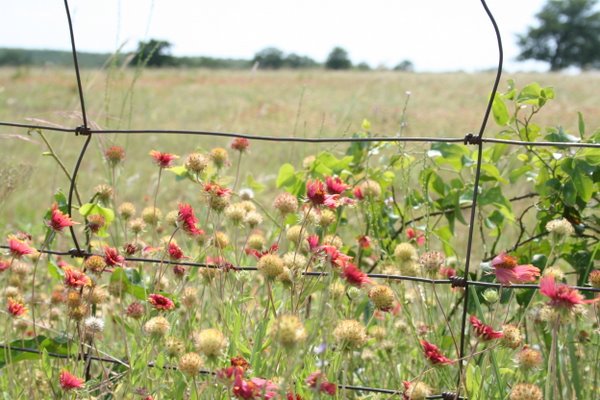
All right, yes..places like that carry me away. I can’t help it. And I hope they always do, because places like the ocean, or the mountains, or a field of wildflowers give me, give all of us, the opportunity, if we allow them, to see just beyond the edges of God’s fingertips and to feel the air move against our faces as he passes near us.

The attraction of these places is precisely the same attraction of the words of the Jesus’ Sermon. In those places, and in these words, God becomes knowable. There’s no humanly inspired doctrine between God’s mountains and our eyes. There is no Catholic, Orthodox, or Protestant theology standing between us and the ocean. In the words of Jesus here, we are hearing our Father’s intentions, with no human interpreters standing in the way.

The appeal of the mountains, the ocean, and these words of Jesus is this.. this is the word I brought back from the shoreline of South Texas with me: Simplicity. These things simplify my understanding and love of God. Here’s an example of what I’m talking about:

Matt 6: 22 “The eye is the lamp of the body. So, if your eye is healthy, your whole body will be full of light; 23but if your eye is unhealthy, your whole body will be full of darkness. If then the light in you is darkness, how great is the darkness!”

In Jesus’ day, a ‘healthy eye’ meant generous. It was an idiom, a part of speech like when we say someone “hit the ceiling.” People would have heard that simply, exactly as he spoke it. Listen how simple Jesus makes it: “The eye is the lamp of the body. So, if you’re generous, your whole body will be full of light; but if you’re stingy, your whole body will be full of darkness. If then the light in you is darkness, how great is the darkness!”

That’s exactly what it says! It is profound in its simplicity. Jesus tells us earlier in the sermon to be like Light, and then he tells us that the secret to being like Light is to be generous. Simple simple simple. But people don’t like ‘simple.’ Listen to what another preacher, who is steeped in doctrine and complicated theology, does with those same verses. I find this both amusing and heart-breaking at the same time. This is from a big church in Dallas. Just listen:

“The meaning of our Lord appears to be something like this: the activities of the body are directed according to the light which is received through the eye. When that organ is sound and functioning properly, perceiving objects as they really are, the whole body is illumined, and we are able to discharge our duties and to move with safety and circumspection. But if the eye be blind, or its vision faulty, then we perceive objects confusedly and without distinction, and then we stumble as if in the dark, and cannot perform our task or journey properly, being continually liable to lose our way or run into danger. So far all is simple and plain. But what, we may ask, is connoted by the "eye"? And what is here signified by "the whole body"? That these are figures of speech is obvious, but figures of what? It is at this point the commentators vary so much in their explanations.”

And then he goes on to quote too many of those commentators.

He takes the simple and elegant words of Jesus and turns them into a testimony to his own intellectual abilities. He turns that which is divinely simple into something complicatedly human. Now I’m not just indicting that preacher for doing such a thing, I’m pointing the finger at myself and all of us: we’re all good at building gaudy and elaborate monuments to ourselves out of the simple, powerful, and eternal understandings offered by God to us. Because those understandings of God, offered by God, are centered around his son and our becoming like his son. And that’s not easy to do while tending to an always-hungry, power-seeking, and applause-needing ego.

Jesus did not come to start a new religion. He didn’t come to be the founder of Christianity. He ministered, lived, taught, and died for the reform of Judaism. The Sermon on the Mount is all about taking the Jewish scriptures out of the private vaults of the Jewish leaders, and opening those scriptures, first to all other Jews, and then the world.

Simple.

But then that Jewish movement got turned into institutional Christianity and everything started to become complicated again. The egos of humans took the self-sacrificing, out-reaching, generous example of Jesus and turned them into the justification for greed, power, and nationalism. Instead of following a man in a muslin robe into meals with sinners, Christians began following men in high hats and expensive robes onto boats with cannons. Instead of walking in the footsteps of a man who treated women, foreigners, and even his enemies as beloved, equal children of God, the institutional church came up with doctrines and rules, ego protecting dogma that would insure the superiority and privilege of some over others.

The beautiful simplicity of Jesus became the complicated religious and political scheming of mankind. The simplicity of following Jesus into a life of sacrifice, generosity, and always growing circles of love, became a complicated, difficult, and- let’s face it- sometimes boring life of being good, following the rules, don’t do this, don’t do that, sit still, sit up, stop laughing, and don’t you even think about having anything to do with those people over there.

The Jesus who dared to touch lepers and other untouchables was reduced to an embroidered cross on a colonial flag. The Jesus who said “turn the other cheek” and then showed how that was done, was turned into an excuse for launching ships of war. The Jesus who invited women and children to come near him, because God loved them, was historically twisted into the mouthpiece and champion of the Third Reich, and those Bosnian perpetuators of “ethnic cleansing.”

Why do we need, why do we so desperately need these chapters 5, 6, and 7 of Matthew again and again and again? Because the Sermon on the Mount reminds us again about the simplicity of a one on one relationship with God. We are reminded by Jesus, told by Jesus, that that relationship is not based on our ability to memorize scripture, pay our tithes, or to do good works. It is based on God’s acceptance of us, as screwed up and as poor in spirit as we already are.

“If you’re generous, your whole body will be full of light; but if you’re stingy, your whole body will be full of darkness. If then the light in you is darkness, how great is the darkness!” We need to remember that the one who said that was not speaking from an air-conditioned television studio. He was sitting on a rock. He had no home to call his own, and he was dependent on others for his daily bread. Yet, he is known 2000 years later as the Light of the World because he was the Light of generosity in a world always ready to go dark under the veil of human stinginess.

It is so simple, Jesus told us: depend on others as they depend on you. It is so simple, Jesus demonstrated to us: love your neighbor as yourself. It is so,so,so simple, it is the theme of everything Jesus said and lived: be generous. Don’t be stingy. Give yourselves to others. “store up for yourselves treasures in heaven..where your treasure is, there your heart will be also.”

Chapter 6, beginning at verse 25: ‘Therefore I tell you, do not worry about your life, what you will eat or what you will drink,* or about your body, what you will wear. Is not life more than food, and the body more than clothing? Look at the birds of the air; they neither sow nor reap nor gather into barns, and yet your heavenly Father feeds them. Are you not of more value than they? And can any of you by worrying add a single hour to your span of life? And why do you worry about clothing? Consider the lilies of the field, how they grow; they neither toil nor spin, yet I tell you, even Solomon in all his glory was not clothed like one of these.”

Beginning in about the year 2700 BC, the first indigenous people began to occupy the longest inter-coastal island in the U.S.- known today as South Padre Island. We’ll get to that name in a minute. Indians lived on the island, moving back and forth between it and the mainland for over 4200 years. They were the Karankowa Indians. For 4200 years, they lived on the generosity of God. They fished during the day and gathered up those side-stepping crabs at nightfall. We would, from the perspective of 21st century, call their lifestyle primitive. They lived for generations without money, Walmart, or television in a place where they depended on each other, and the ocean, for their daily bread. For a period of time 20 times longer than the U.S. has been a country, the Karankowa lived in community with each other, and with God.

The problem was, in the eyes of the Catholic missionaries who began arriving on the island in the early 1500s, these Karankowa didn’t know the proper name of that God, and they would need to learn it. So they were taught that name under the auspices of the holy royal family of King Ferdinand and Queen Isabella, a family whose royal claims were of course supported and protected by the Church in Rome.

The Spaniards put the Karankowa to work, building missions, clearing ranchland on the island, and building and launching ships on the mainland for the Spanish assault on the gold of other Indians throughout Mexico and Central America. Man had entered the forest- stingy man, men with bad eyes- ungenerous, selfish natures.

After having lived on the Island for 4200 years, it was only 350 years before the tribe was extinct. Gone. Forever. Killed off in large part by the guns, germs, and steel of the remnants of the Holy Roman Empire, the last several hundred members of the tribe died in a mass suicide in the 1850s rather than convert to the Christian religion they had been experiencing, and become slaves to the new Island owners. Who were former missionary priests, and who had been given the island by the Mexican government in 1829. Padre Jose Balli- you can still see his statue as you exit the Queen Isabella bridge to his Island from Port Isabel.

But squint your eyes, even now, even from a sixth floor balcony, and it is possible to get a glimpse here and there for increasingly longer moments, of what it once was like, what the world was like once upon a time for those other generations of peoples created also in the Image of God. The light of the moon, reflected in eternal rows of white capped waves reveal birds- terns, gulls, pelicans- even at nite, flying just above the ocean’s surface- feeding and flourishing in the reflections- the generous reflections- of God on this part of Creation. Without a single thought toward sowing or reaping or gathering into barns, these also beloved creatures of our father live and move and have their being.

Look closer at the shoreline now. Great vast growths of kelp roll to the beach from massive growths beyond the breaking waves. Kelp, feeding fish, once having fed Karankowa Indians, pouring forth as a by product of their underwater photosynthetic activity, tons of life-giving oxygen into the atmosphere: God’s largesse, God’s generosity.

And across the dunes below, the spreading, reaching tendrils of ivy and wetland grasses reach with deep rooted perserverance through million year old sand toward pockets of fresh water. In response to that life giving moisture, they bloom in magenta, lavender, and blue fire- lilies of the dunes, not a single worry, no worry or toil. But they shout to all who would hear them of our God’s- their God’s, our God’s- generosity.

Simplicity. It is shining through the clutter all around us, if we look for it with our good and generous eyes. It echoes in the words of Jesus, if we choose to hear them with our good and generous hearts..

Thursday, August 9, 2007

On Beyond Zebra, with Dr. Seuss and Jesus

The word “gospel” is a slight corruption of an old English phrase- godspell- meaning, good news, and while it can mean good news about anything, we know the four primary records of good news about Jesus as gospels- the books of Matthew, Mark, Luke, and John. But there is other good news, too, and I’m going to begin tonight by reading from the gospel of Dr. Seuss, the book On Beyond Zebra, pages 1 through 5:

“Said Conrad Cornelius o”Donald o’Dell, My very young friend who is learning to spell: ‘The A is for Ape. And the B is for Bear. The C is for camel. The H is for Hare. The M is for Mouse. And the R is for Rat. I know all the twenty-six letters like that..

“..through to Z is for Zebra. I know the all well.” Said Conrad Cornelius o’Donald o’Dell. So now I know everything anyone knows, from beginning to end. From the start to the close.

“Because Z is as far as the alphabet goes.’

“Then he almost fell flat on his face on the floor when I picked up the chalk and drew one letter more! A letter he never had dreamed of before! And I said, ‘You can stop, if you want, with the Z, because most people stop with the Z. But not me!

“In the places I go there are things that I see that I never could spell if I stopped with the Z. I’m telling you this ‘cause you’re ne of my friends. My alphabet starts where your alphabet ends!”

This is a theme of all of Dr.Seuss’ books- unlocking the reader’s imagination with his own. He actually felt sorry for the Conrad Cornelius o’Donald o’Dells of the world and wanted to do whatever he could to keep their young imaginations alive.

And not merely alive, but curious, creating, and- above all- free. “Oh, the places you’ll go! There is fun to be done!” Dr. Seuss wrote in his last book. But to get there, he told the kids, and the parents who read to them, to get there, you’ll have to never stop looking with your eyes and your minds wide open; never stop looking down Mulberry Street to see what others cannot see. Imagine the fun you could have if the Cat in the Hat would come to visit. And listen, all the time, like Horton the elephant, for the tiniest Who. “A person's a person, no matter how small,” Who says. For little kids, especially, sometimes it feels like they’re surrounded by big adult Hortons who don’t hear them very well. But keep talking, Dr. Seuss tells them- tell them you’d like Green Eggs and Ham for breakfast today, they’ll hear you! Tell them:

“My alphabet starts with this letter YUZZ. It’s the letter I use to spell Yuzz-a-ma-Tuzz. You’ll be sort of surprised what there is to be found once you go beyond Z and start poking around!

“So on beyond Zebra! Explore! Like Columbus! Discover new letters! Like WUM is for Wumbus, my high-spouting whale who lives high on a hill and who never comes down ‘til it’s time to refill. So, on beyond Z! It’s high time you were shown that you really don’t know all there is to be known!”

Our imaginations take a beating as we grow older. We get criticized for coloring outside the lines, painting the sun green, or for asking, “Why?” too many times. We learn just enough history and science just long enough to pass the test- most of us. Or we learn to be acceptable and depend on others to do our imaging for us- we need TV or movies to make us laugh, cry, or even think sometimes. We even end up having faith in somebody else’s faith- but more about that in a minute.

Every generation needs a Dr.Seuss, a dozen of them. Because the ruts of routine into which we can all get bogged down, are always changing. Who would have thought, in 1954 and 1955, when most American households were getting their first television sets, and sitting in amazement, with their imaginations on fire while they watched Milton Berle or Bishop Sheen, that one day their grandchildren, by the age of 5, would have seen approximately 30,000 commercials telling them the same thing over and over: buy stuff and be happy.

Every generation needs someone who will chase us away from the TV and into a new book. We need those persons who can inspire us to bend down and see the miracles happening in our backyards. We need a friend, a companion, someone who cares enough about us to say. “Open your eyes again! Unstuff your ears!” Someone who will enable us to imagine again, to be able to see “three free fleas flying through three cheese trees,” or to think at night, just before we go to sleep, “to think that I saw it on Mulberry Street!”

Well, I’ve got Good News for you! I’ve got Godspell, and here it is: we have that kind of companion, to lift us out of the ruts and save us from the ditch. We have that kind of guide- who will hide the TV clicker from us while he points outside to the birds of the air and the flowers of the field for answers. We have that kind of Savior, who will and does, set captives free, from the chains of routine, from the fears that cause us to build fortresses against new ideas, and from the slavery of mere faith in someone else’s faith.

And here’s the evidence. Here’s where Jesus takes us On Beyond Zebra, past the spiritual and legal alphabet of his day and for all time. Listen now, as Jesus, a rabbi who very few people knew, but many had heard about, listen as Jesus sits down in the middle of a crowd of people who feel unworthy of the priesthood and excluded from the Temple, people who are looked down upon by the Scribes and Pharisees and who know they will never ever get to see inside that Holy of Holies where God dwells. Listen, as minds explode when Jesus says,

“Blessed are the poor in spirit, for theirs is- is, is!- the Kingdom of Heaven!”

Listen, too, as he says to those families standing around them, every one of whom has lost one, two, three children in infancy. Listen as he speaks to the men, 20 to 30% of whom have lost wives in childbirth, and to the women who have lost husbands at sea. Listen as he says to them,

“Blessed..blessed are those who mourn, for they shall be comforted!”

Blessed are the meek, the merciful, the peacemakers; blessed are those who hunger to know God, and blessed are those who have been put down by every priest and soldier they pass by. Blessed are those who have been insulted, and lied about. Rejoice! And be glad! For great is your reward in heaven!

Can we imagine how those words were blowing the lids off minds that day? Can you imagine that those words still are having the same effect right now on people right here in this room? Can you accept that Jesus is still grabbing for our imaginations and saying to us, “There is more to know! There are more places to go! There is more fun to be done!”

Now, in case anyone in the crowd that day hadn’t understood yet what was happening, and just in case there may be someone here wondering what the dickens is that guy from Jack County talking about..Just in case..listen to this, because Jesus is going to say something six times:

"You have heard it said..” and then follow that statement with a saying from Hebrew scripture. “You have heard it said, ‘an eye for an eye and a tooth for a tooth.” He introduces an old scripture that way, then immediately adds,

“but I say..” before putting a whole new and up to date meaning on that old scripture: “You have heard it said, an eye for an eye and a tooth for a tooth, but I say, turn the other cheek, if a robber wants your coat, give him your shirt, too!”

Six times he does that- “You have heard it said, but I say..”. He is taking the dry, legal faith of someone else, wetting it down with his son of God imagination, and handing it to people who have just been set free.

“You have heard it said…but I say..” It is exactly as if he is saying, You know the alphabet, but there’s more to know, much more. You know all the letters A to Z, but there is Yuzz, and Um, and Wum, and Humph still to learn!

We make a mistake I think by not freeing the stories Jesus told from their history. It is very, very important to understand the meanings of the time these words were spoken in, but once they are understood, we can resurrect them into the year 2007, and let them help us unlock our imaginations again. Here’s an example, it’s from Luke 18, beginning at verse 9. I’m not changing the meaning one bit. But I am going to pour imagination all over it. And I’m choosing this scripture because of what comes right after it, in verse 15.

Luke 18: 9-14.

(Jesus told this parable to the yearly Convention of the One True Church of Jesus in America, meeting this year in the Dallas Convention Center. These were the men, all men, who knew they were the only ones on earth who had Jesus down right and so they also knew with great satisfaction, that the rest of the world was going to hell.)

Verse 9: Jesus said this to them. “Two men went up to the new $15 million Church of the Suburbs in Plano. One was a Bishop, appointed by his daddy, the former owner of the church. The other man was a Security Guard, hired by the church to watch over the Humvees and BMWs in the parking lot. The Bishop checked himself in the mirror, and had his assistant dust him with a little powder before looking into the television camera, and praying from the tele-prompter, ‘ Gawwwd, I thank you that I am not like other people: people on welfare, drug-users, sexual deviants, or even like that guy over there who works in the parking lot..what’s his name. I tithe from my salary down to the penny- don’t even miss it. I even miss breakfast, twice a week, so that I may lead the young women’s group here at the church in a Bible Study.’

But the security guard stood in the bushes near the entrance of the church- he’d never been inside before. He felt ashamed of all the bad choices he’d made in life which had ended him up here at age 44 in a part-time minimum wage job. He wrung his hands together, and he cried as he whispered, ‘God, be merciful to me, a sinner.’

Jesus said to the Conventioneers, ‘I tell you, that man out there crying made God smile, because he’s someone God can work with. He’s got nowhere to go but up. That other guy..what’s his name..that so-called Bishop.. he’s got to where left to go, but down.’

Now if I changed the meaning of that scripture even a little bit, you get onto me about it, because I don’t want to do that. That wasn’t my intention. I just wanted to try to do what Jesus did all the time, and take the story a little bit beyond Zebra.

Here’s another fascinating thing, though. The story which immediately follows that one about the two very different men, is the one about Jesus and the children. In other words, all the pompous Pharisees who just got slapped in their egos by the story Jesus just told, are about to get poked in their judgmental eyes when they saw what Jesus did next. I’m reading this one straight.

Verse 15: People were bringing even infants to him that he might touch them; and when the disciples saw it, they sternly ordered them not to do it. (They were just following ancient Temple Law, by the way, which didn’t allow children inside because, also according to that law at the time, children weren’t real people yet. In the same way that women weren’t whole, complete people,either.) 16But Jesus called for them and said, ‘Let the little children come to me, and do not stop them; for it is to such as these that the kingdom of God belongs. 17Truly I tell you, whoever does not receive the kingdom of God as a little child will never enter it.’

How does a child receive the Kingdom of God? They can’t buy their way in, they have no monetary assets. At least they didn’t at the time of Jesus. They can’t go door-knocking and preaching on people’s front porches; there’s not a lot of big religious work they can undertake. All they have is themselves. All they have is their desire to be near the one who has invited them to come near. All they have- and they’re working at their best at the ages of 2, 3, 4, and 5- is their imaginations!

Just a few minutes before, in this Sermon on the Mount, Jesus had blessed their parents. For the first time ever, poor people, unclean people, people who couldn’t go and stand in the Temple like “good” Jews, these outcasts, these people poor in spirit, had been told by a rabbi, by an obvious holy man, that they were blessed! This was pretty exciting news for people who thought they were forever assigned to living at the edges of society, on earth and in heaven.

This man, this holy man, was telling them that there was more than the law, there was something beyond the law. There was more of a relationship possible and here was this rabbi telling them that they were in that relationship already! There was more, more, more to be known about God than what the Pharisees had told and taught them, or even that the Pharisees themselves knew!

Can you imagine the wonder these parents who heard that must have had, about the children who were with them? “If he says we’re blessed- we who have nothing- then maybe our children are blessed, too! Let’s find out..” And, nervously, they begin carrying their children up through the crowd to where Jesus himself is sitting..pushing themselves beyond the boundaries of what is normal…then they hear him say, “Bring them!”

Let the children come to me and do not stop them! Later on, in another story, Jesus would say, in effect, “Don’t you dare stop them!”

The Kingdom of God is also practical- another new revelation, and Jesus demonstrated that, too. It is not about going through religious motions. He was not talking about a pie in the sky, nose in the air way of doing his Father’s business. When people were hungry, he fed them. When others were thirsty, he gave them something to drink. The gospel cannot be heard by anyone who is starving. The first and best gospel message for many is a hamburger..and then, Jesus.

On beyond the words of deadening doctrine spoken by those who measure the Kingdom of God in rules obeyed and pledge cards received. On beyond the rituals, the endless committee meetings, and the eighty-first verse of O, For a Thousand Tongues to Sing. On beyond churches who have made ignorance of a science a virtue to be embraced and on beyond churches who still still still regard women as half-formed men. On beyond the alphabets of worship which leave us comfortable and satisfied while children anywhere are hungry, thirsty, or dying.

On beyond the word made dead by legalism and into the word made flesh in Jesus.

Jesus said two words, which for me, summarize everything there is to know about being his disciple. I can study the theology of others all day and into the night, and I have. I can spend a lifetime lining up all the spiritual jots and tittles until I’m sure God approves of me. I can do those things, or I can respond as the first disciples did when he turned to them and said “Follow me.”

Jesus will put you with people you had consigned to the ash heap before you knew him. He’ll hand your heart to others and hand theirs right back to you. He’ll get your hands dirty, smelly, even bloody sometimes, and you’ll feel grateful to have served him. Jesus will make you touch the formerly untouchable, listen to stories that make you cringe, and go places you thought, once upon a time, you’d never step foot in. And in response, you’ll say “Thank you” and look forward to the next time.

Then he’ll lead beyond the mundane routines and into the realm of daily, hourly miracles. And “Follow me” are the only words you need to go there.

There is, simply put, work to be done, beyond reading the stories of Jesus. There is life happening outside the walls of church. We get to live those stories now, and make them our own gospels. There is the love of Jesus yet to be realized, practically and divinely, in the lives of countless peoples around the world.

Finally, these words of Dr. Seuss..and I’m sorry if sounds blasphemous to say that I can hear Jesus speaking these words, too, but I can..

“The places I took him! I tried hard to tell Young Conrad Cornelius o’Donald o’Dell a few brand-new wonderful words he might spell. I led him around and I tried hard to show there are things beyond Z that most people don’t know. I took him past Zebra. As far as I could. And I think, perhaps, maybe I did him some good…

“Because, finally, he said: ‘This is really great stuff! And I guess the ld alphabet isn’t enough!’

“Now the letters he uses are something to see! Most people still stop at the Z…But not HE!”

And I won’t stop there, and I don’t think you will, either.

Blessings.

Amen!

Sunday, July 1, 2007

The Free Life

One of the things we are thankful for, living in America, is freedom. We say that. We celebrate that, with parades, songs, and fireworks. And we emphasize that notion with the occasional war.

So I’d like to look at freedom for a few minutes- the concept and the reality, and then hear a few other comments from the Apostle Paul.

Freedom. There is an ingrained maxim in the U.S. that our pursuit of happiness is in direct proportion to our freedom. Our Declaration of Independence says so. And one of the evidences of our freedom is our ability to make choices. Our freedom is maximized by the maximized choices we have.

Maybe..

I like freedom, don’t mistake anything I say here otherwise. But I do wonder if we need to think about freedom a little differently. Here’s what I mean:

At a typical Kroger’s store in Dallas or Fort Worth one has a choice of 285 different kinds and brands of cookies. 40 brands and types of toothpaste. And 175 kinds of salad dressing; that’s if you don’t count the 10 brands of extra virgin olive oil and the 8 brands of balsamic vinegar that you can use to make your own salad dressing should none of the aforementioned 175 kinds meet your needs.

In a typical Fry’s electronic store, it is possible- their estimation- to configure, with items in stock on any given day, 6.5 million versions of an entertainment center for one of the walls of your living room. Different speakers, tuners, televisions, amps, stereos, DVD and tape players, recorders, etc.

In communications equipment there are chapters of choice being added daily. We saw Friday and Saturday the introduction of Apple’s iPhone- an incredible piece of technology, it really is. It has, in some circles, enlarged what we call our basic set of freedoms, by giving consumers yet another choice in communicating with others. I dare say that every one in here today who has a cell phone, has a slightly different model or style from everyone else. Apple is working very hard to make the iPhone the one phone to which we all aspire.

Many of us remember, living in what was a free country then, too, when we could have any kind of phone we wanted as long as we called AT&T to get it. And even then we rented it, which means those phones never broke. And they still haven’t.

Even beyond non-material goods, we have a whole new array of choices in service areas like health care. It used to be that you went to the doctor and the doctor would say here’s what’s wrong and here’s what needs to be done. Now, it is a matter of options- “Here’s the problem, here’s some solutions, here’s the side effects, what would you like to do?”

“Just tell me, Doc, if you were me, what would you do?”

“Well, I’m not you; here’s the problem, here’s some solutions, here are the side effects, you choose..”

Which is why we see drug companies advertising on television their prescription products which we can’t just rush out and buy. They know we have the choice of calling our doctors and telling our doctors that we want the little purple option, or that we want that pretty green moth to flutter into our bedroom at night, too. And the drug companies know our doctors will listen to us, and do- most of the time- what we say. Or what the drug companies have told us to say. The pharmaceutical houses are using us, the customer, to create the demand.

Choices seem to equal freedom. More choices equal more freedom, yes? But good news never comes without the possibility of bad news, too.

One downside of having many choices is paralysis. We have so many choices we can’t decide and so we do nothing. One small evidence of that which we can almost all relate to is our Dish or Cable Television choices. 900 channels, and we find “there’s nothing good on.” Is that true, or is it that we simply can’t or won’t decide?

There was also a study done by Vanguard- the huge mutual fund company- which confirms this. The more options a company gives employees regarding their retirement program, the fewer that sign up for any of them. For every 10 programs presented beyond 5, the number participating in any program dropped by 5%, even when the employer was offering matching funds! It was too hard to decide, I’ll decide tomorrow, or next week, next year, and on and on. I know most of us can relate, if not about mutual funds, then about any of so many other, many-optioned decisions we have to make.

Paralysis- indecision- is one downside to having many choices. But here’s another, and studies are being done, and I’m certain they will confirm what many of us have experienced. Because we have so many expectations, so many possibilities to choose from, our expectations become very high, unnaturally high. We make a decision, finally, about buying a house for instance, or a car, or a college education, or.. whatever. And then we immediately begin second-guessing ourselves- because we can!

It is easy for us to begin to imagine alternative decisions we could have made, because they did exist. Any disappointment we may be realizing from our purchase- and who isn’t easily able to be disappointed in something about whatever it is we just bought- we blame ourselves for those disappointments. We should have made a different choice. Our standards are so high that we disappoint ourselves- “What an idiot I was!” or “I’m so stupid!”- when in reality, it was the number of choices, not us, that has caused us to set our standards so impossibly high. Prolonged disappointment in ourselves of this sort is a gateway to depression, and depression in America, the “most free” country in the world when we measure disposable incomes and ways and places to dispose of that income, depression in America is an ever-growing plague.

Our choices are legion. Our inability to decide is increasing. Our expectations are unrealistically high. And our disappointment in ourselves- for not buying the 80 GB iPod instead of this stupid old useless 20GB piece of junk- our advertising agency inflicted disappointment in ourselves is growing. No wonder we’re depressed!

But I’ve got a special little pill here for you. You can decide whether you want it or not. I’m not you; I can’t decide for you. But here it is. It’s something the Apostle Paul wrote to the church meeting in Galatia. I’m reading it from the Message, because it’s easier to hear that way. Which might make it easier for us to decide.

Galatians 5

13-15 It is absolutely clear that God has called you to a free life. Just make sure that you don't use this freedom as an excuse to do whatever you want to do and destroy your freedom. Rather, use your freedom to serve one another in love; that's how freedom grows. For everything we know about God's Word is summed up in a single sentence: Love others as you love yourself. That's an act of true freedom. If you bite and ravage each other, watch out—in no time at all you will be annihilating each other, and where will your precious freedom be then?

Paul begins to say something here that’s important. He’s calling freedom a good thing, and a dangerous thing. Even within the boundaries of the Law, we know we can make choices, market-driven, Constitutionally-protected choices that will land us- very possibly- in a heap trouble. As soon as a young person hits their 21st birthday, forget the 285 kinds of cookies they can go to the grocery store and buy, they can head to a liquor store and buy any of, I would guess, a thousand different ways to be unconscious in two hours. They have the freedom to buy the first links of a chain that could enslave them for years, or for a short lifetime.

We all have the freedom to give up our freedom to banks and credit card companies. We used to see a phenomenon in Dallas- I’m sure it still exists- of the “Big House-Empty House.” Mortgage brokers made it so easy to find a mortgage- forget the interest, we’ll figure all that out later- that would put a young couple in a bigger house than their parents ever had- “haha, beat you, dad!” But then they sat in bean bag chairs and ate off TV trays while they waited for another credit card offer to arrive in the mail. Big House-Empty House. Freedom to choose, but not much fun, and the choices of divorce and depression often suddenly appear in the doorway.

16-18 My counsel is this: Live freely, animated and motivated by God's Spirit. Then you won't feed the compulsions of selfishness. For there is a root of sinful self-interest in us that is at odds with a free spirit, just as the free spirit is incompatible with selfishness. These two ways of life are antithetical, so that you cannot live at times one way and at times another way according to how you feel on any given day. Why don't you choose to be led by the Spirit and so escape the erratic compulsions of a law-dominated existence?

19-21It is obvious what kind of life develops out of trying to get your own way all the time: repetitive, loveless, cheap sex; a stinking accumulation of mental and emotional garbage; frenzied and joyless grabs for happiness; trinket gods; magic-show religion; paranoid loneliness; cutthroat competition; all-consuming-yet-never-satisfied wants; a brutal temper; an impotence to love or be loved; divided homes and divided lives; small-minded and lopsided pursuits; the vicious habit of depersonalizing everyone into a rival; uncontrolled and uncontrollable addictions; ugly parodies of community. I could go on.

A little less choice may mean, it sounds like Paul is saying, more freedom. Let’s think for a minute of a goldfish in a medium sized fishbowl. We watch it, doing what goldfish do, and we lean in and whisper to the goldfish, “You can be anything you want to be!” And the goldfish hears us, takes our well-meaning words to heart, and asks us one day, “Help me? Help me to be free?”

So we pick up a hammer, and free him..he has no more boundaries, no more limitations as he slides from the bowl in a gush of water. Quickly, though, he ends up on the floor- paralyzed and frustrated, then depressed and dying.

I wonder, sometimes, if we in our affluence have not gone on beyond the bowl of Creation in which we were meant to live and thrive. Have we broken through the environmental and life-giving walls of what we have decided is limited freedom to end up on the floor, paralyzed, depressed, and dying? Have we allowed the Kingdom of God, within us and outside of us, to be hammered into a broken, temporary illusion of unlimited freedom?

Here, as a reminder from Paul, are the payoffs for staying in this marvelous, incredible, ever-able-to-be explored, but limited fishbowl of God’s Creation into which we born:

22-23 But what happens when we live God's way? He brings gifts into our lives, much the same way that fruit appears in an orchard—things like affection for others, exuberance about life, serenity. We develop a willingness to stick with things, a sense of compassion in the heart, and a conviction that a basic holiness permeates things and people. We find ourselves involved in loyal commitments, not needing to force our way in life, able to marshal and direct our energies wisely.

Freedom comes to us as a God-given right- the framers of the Declaration of Independence were absolutely correct! But unlimited freedom, and the always endless choices that go with it, are not life-giving. They are conjured up by people with hammers and sold to us as rights we have. God’s choices for Creation, for us, are enough. They are the standards which can cause our decisions to be easier to make, and better for us and our children and our neighbors, next door and around the world. Those God-given boundaries in which we enjoy Life, Liberty, and the Pursuit of Happiness are the only ones to which it is worth pledging to each other our Lives, our Fortunes and our sacred Honor.

Here’s one more way to look at it. You can remember everything I’ve just said by imagining this: The choice between one of Ozella’s fried pies and a slice of Jean’s angel food cake is enough, more than enough, isn’t it? 285 kinds of cookies cannot possibly make anyone happier than that.

Amen

Monday, June 18, 2007

Step 12 of the 12 Steps: The Point of the Journey, So Far

12. Having had a spiritual awakening as the result of these steps, we tried to carry this message to other addicts, and to practice these principles in all of our daily living.

Ever since the Greek writer Homer wrote about the wanderings of his mythic hero Ulysses in the Odyssey, the idea of a journey has been an often used metaphor for understanding life. We are able to understand and know Abraham, for instance, because in Chapter 12 of Genesis, it was written: “Now the Lord said to Abram, “Go from your country and your kindred and your father’s house to the land that I will show you.,” and he did. If he’d have stayed in his father’s land where everything was familiar and comfortable, all the episodes of Abraham’s life which added up to his being the father of Judaism, would never have happened.

In Genesis, the journeys of others are used to describe spiritual as well as geographical change: the journeys of Noah, Jacob and Esau, then of Joseph, then another wandering journey: the 40 year journey of Moses from Egypt to the Promised Land.

We fit Jesus’ life into a journey, from the stable to the cross. Dante’s Inferno later described a journey, into hell. Mark Twain in the Adventures of Huckleberry Finn, described the maturing of a boy and the maturing of a nation after the Civil War, by describing a journey on a raft down the Mississippi. Jonathon Swift, Gulliver’s Travels. Jules Verne’s Journey to the Center of the Earth. John Steinbeck, Travels with Charley. Jack Keroauc, On the Road.

Humans have an understanding of journeys; we understand, unlike any other life-form on earth, we understand beginning and ends, filled with chapters and plot twists and revelations. Reading about the journeys of others is an easy, but also deep and meaningful way of understanding our own journeys through life.

You may have been able to see by now, as I’ve talked about the Twelve Steps, that there is a very real journey involved in moving from Step One to the Twelfth and final step. The alcoholic or addict, or the person whose personal identity has been lost in the compulsive behavior of chemicals or culture, comes to a determination and begins again to move: “We admitted we were powerless; that our lives had become unmanageable.” They begin, by saying those words, to leave a place of powerlessness, yes, and of unmanageability, yes, but most of all, they begin to work up the gumption, based on their own life’s messes and based on the testimony of others at this point, they begin to move from a place of hopelessness.

If you have never been there, to that place, where life has been reduced to mere need, where your best friends are the clerk at the liquor store, or the pharmacist, or whoever it is that has sent you yet another Mastercard application; that place where you cannot see clearly into the next hour, let alone the next day, or year; if you have never been there, Hallelujah! Hallelujah! Hallelujah!

If you have, there is no need for my trying to describe it further, because hopelessness is everything so inhumane and so ungodly, that my words cannot begin to describe it for you and it would be insulting of me to even try.

To move from that place of hopelessness, to begin to take that very first step outward, involves strength and courage that can only come from outside of ourselves. It’s not within us anymore to go on. Admitting that out loud to another person, or to God, or to just scream it into the darkness- is where everything begins to be made new. It may feel, at the time, like it is trying to light a candle on a windy seashore, but it is, in fact, the very first light of a new dawn.

It’s the beginning of a journey- a journey which will turn us inside out. It will really hurt. It’s a journey that will force us from our sickbed of terminal uniqueism, into a community where we will find people who are just as screwed up as we are, but who are also, we will find, as beloved of God as we are.

It’s a journey from certain early death to life, through ten more steps after that first one, until we arrive at this one, Number 12: “Having had a spiritual awakening as the result of these steps, we tried to carry this message to other addicts, and to practice these principles in all of our daily living.”

Journeys have beginnings, and journeys have destinations. This is the destination of the Twelve Steps. It is not merely a destination though; it is a rest-of-our lives place of continued and continual healing; of giving away as often and as much as possible what we have been given and, in so doing, becoming wealthy in the knowledge of our place in God.

Bill W., a drunk insurance agent in Akron, Ohio- the founder, along with Dr. Bob, of AA, wrote this in a letter, years after he had enabled tens of thousands of others to become sober:

“Those adolescent urges that so many of us have for top approval, perfect security, and perfect romance, urges quite appropriate to age seventeen, prove to be an impossible way of life when we are at age forty-seven and fifty-seven.

”Since AA began, I've taken immense wallops in all these areas because of my failure to grow up emotionally and spiritually. I kept asking myself "Why can't the twelve steps work to release depression?" By the hour, I stared at the St. Francis Prayer ... "it's better to comfort than to be comforted". Here was the formula, all right, but why didn't it work?

”Suddenly, I realized what the matter was. My basic flaw had always been dependence, almost absolute dependence, on people or circumstances to supply me with prestige, security, and the like. Failing to get these things according to my perfectionist dreams and specifications, I had fought for them. And when defeat came, so did my depression.

“Because I had over the years undergone a little spiritual development, the absolute quality of these frightful dependencies had never before been so starkly revealed. Reinforced by what grace I could secure in prayer, I found I had to exert every ounce of will and action to cut off these faulty emotional dependencies upon people, upon AA, indeed upon any act of circumstance whatsoever.

”Then only could I be free to love as Francis did. Emotional and instinctual satisfactions, I saw, were really the extra dividends of having love, offering love, and expressing love appropriate to each relation of life.


”Plainly, I could not avail myself to God's love until I was able to offer it back to Him by loving others as He would have me. And I couldn't possibly do that so long as I was victimized by false dependencies.”

If we’re going to begin to be whole, if we going to have a chance at continued sobriety; if we’re going to, any of us, have a chance at a life that reflects the God-image in us; if we’re going to, any of us, give up the culture-driven, ego-driven drives within us that keep us from our Promised Land, then, we, too, must give up what is false, to make room for that which is true.

And the best way to do that- the only way to that- is to give away all of that false pride, those false emotional dependencies on others.

The best example I can think of is one I’ve told you about before, but it’s an image that defines me, and you feel free to borrow it. Etta was a 65 year old Lakotah Sioux woman that my wife and I worked with in South Dakota. Born in 1910, she had been of that generation that was forcibly removed from her parents to go to white man’s boarding school. After that, she was relocated, also by the government, from the reservation to Chicago, to become assimilated, which, in government jargon meant, to become white.

She tried; they all tried. But Etta failed and ended up at the bottom of a bottle for many years. She made her way back to the reservation in the 50s, married a man 30 years her senior- her third marriage. But this time she married a man who had never stopped being Indian, and who knew Jesus. Together, John and Jesus brought Etta home.

It meant an end to the false pride forced upon her. She came to the end of dependency on others, so unlike her, for approval. In the acceptance of her people as she was, Etta could accept herself, as she was becoming.

There are so many incidents and stories of being around someone who served others in the name of Jesus, without ever considering it an obligation to do so. One late afternoon, I was with her when she got a call that an old man, a neighbor of hers, needed a ride home. He been found by the road, by the police, passed out. “David and I will be there,” she said to whoever it was on the phone, while she was making it impossible for me to say “No.”

We drove into the country, got _____ into the car, where he fell into the back seat and promptly threw up, all over Etta’s floor. Etta laughed while I cringed. “Smoke a cigarette,” she said, “so that you can’t smell it.” And she drove _____ home. Without a single complaint. No preaching. No condemnation of _____. Only acceptance. Only service. Only Jesus.

Back to Bill W.’s letter: “This seems to be the primary healing circuit: an outgoing love of God's creation and His people, by means of which we avail ourselves of His love for us. It is most clear that the real current can't flow until our paralyzing dependencies are broken, and broken at depth. Only then can we possibly have a glimmer of what real love really is.

”If we examine every disturbance we have, great or small, we will find at the root of it some unhealthy dependence and its consequent demand. Let us, with God's help, continually surrender these hobbling demands. Then we can be set free to live and love: we may then be able to gain emotional sobriety.”

And that’s where we are going in this journey of the 12 Steps, and in this journey of Life. “Having had a spiritual awakening as the result of these steps, we tried to carry this message to other addicts, and to practice these principles in all of our daily living.”

Which means, by the way, carrying this message- this message of spiritual growth and human wholeness- not only to addicts, but to everyone. Daily living includes people who all around us who are living in various degrees of hopelessness. We may outwardly believe, if we are still buying into the false pride and false emotional dependencies of the world, we might make the mistake of assuming that the guy across the street is nothing more than a loud-mouth show-off. Or that “her” sister is just a gold-digging little tramp. Or that the guy with the new car every year has “got it made.” Or that the drunk passed out beside the road is just another drunk Indian, let him lay there and sleep it off.

But each of them, bottom line, is far more like us, than they are unlike us. Having done a spiritual and moral inventory of ourselves back in Steps 4, 5, 6, and 7, it is forever impossible to see anyone again only through the narrow-focused lenses of our own egos. We can begin to see others in the light of mistakes they’ve made, and their regrets, and in the knowledge that they, too, are involved, like we were, in actions of self-deception and denial. We can see them, and know them, for the fragile creatures they and we are.

And that makes all the difference. It is the point where, as Paul said, “Behold! All things become new.”

When Jesus stood up in the synagogue and publicly announced his ministry, he didn’t turn to Isaiah 61, he picked up the scroll and read from that place where it said:

The spirit of the Lord God is upon me,
because the Lord has anointed me;
he has sent me to bring good news to the oppressed,
to bind up the broken-hearted,
to proclaim liberty to the captives,
and release to the prisoners;
2to proclaim the year of the Lord’s favour,
and the day of vengeance of our God;
to comfort all who mourn;
3to provide for those who mourn in Zion—
to give them a garland instead of ashes,
the oil of gladness instead of mourning,
the mantle of praise instead of a faint spirit.
They will be called oaks of righteousness,
the planting of the Lord, to display his glory.

Later on, Jesus said that “those who come after me will do even greater things than I have done.” That’s the responsibility being handed on to us by Jesus, by Bill W., Doctor Bob, and Etta. We are the ones on this planet, right now, we are the ones to bring good news to the oppressed. We are the only ones- those of us who can see beyond ourselves into the Kingdom of God, the Kingdom of Continuing Creation- we are the only ones Jesus has right now, to proclaim liberty to the captives, and release to the prisoners.

We are the only ones with any inclination at all to have a sick guy in the back seat of our car and be able to imagine at all that God sees him, that guy who just messed up the back seat, as an “oak of righteousness, planted by the Lord, to display his glory.”

A final word from Bill W., at the end of his letter: “Nowadays, my brain no longer races compulsively in either elation, grandiosity or depression. I have been given a quiet place in bright sunshine"

Step 12- that’s all you need to remember about it; it’s the destination of all of our journeys: “a quiet place in the bright sunshine” where the belovedness by God of all persons can finally be seen.

(An AA chip) This was given to me this earlier this week, by a brother in Christ who’s also a brother of the 12 step table. I show it to you not because it has a single thing to do with me, it absolutely does not. This is a thirteen year medal of sobriety. It belongs to Etta, to my wife, to my family, to the hundreds of people around tables as I was going to 90 meetings in 90 days back in 1993 and 1994, and to the people I sit with now on Wednesdays, and the people I stand in front of today. It belongs to Jesus, who really, really does continue to do great things.

Amen..

Tuesday, June 12, 2007

Step 11 of the 12 Steps: Knowing God Better

11. Sought through prayer and meditation to improve our conscious contact with God as we understood Him, praying only for knowledge of His will for us and the power to carry it out.

This is the latest edition of the North Texas Conference newspaper and this week’s edition shows all of next year’s assignments of pastors to churches. This makes it official: David Weber, Jacksboro.

My heart is with those who are moving to new places this morning, because I remember what it was like four years ago doing the same thing. I was thinking this week of what that one last thing might be that I would want to talk to you about if we in fact were on our way to somewhere else. And what that topic would be is exactly the same theme as this 11th Step.

Whether we are involved in the 12 Steps and learning to live sober, or whether we are moving through our lives with the desire to better know and more closely follow Jesus, we must arrive at a place- not a geographical place, but a spiritual place. It is that place where we enter into state of communication with God, a place of prayer and meditation with God.

Those words- prayer and meditation- are loaded with traditional meanings. If there is one thing I hope you know by now about me by now, and feel good about exploring for yourselves, it is that we must not ever bound in our journeys with God by the traditions of other people, no matter how old and well established those traditions are. There is the familiar story of the new bride who was serving her husband her family’s special roast beef. After a couple such meals, the husband asked his wife why she always cut the ends off the roast before putting it in the oven. “It’s better that way.. it browns better, I guess” was her response, which was the only response she had.

When the in-laws came to visit, mother-in-law prepared her version of the family’s roast beef special recipe and new husband watched her as she cut off the ends of the roast, too, before adding various spices. “Why do you cut off the ends like that?” he asked.

“It just makes the roast better, more juicy, it cooks better that way..I think. Anyway, that’s the way we’ve always cooked it in our family,” was her answer to the question that she’d never been asked before.

At Christmas, new wife and husband made the journey to grandma’s house. On Christmas Day, grandma announced that they would be having her special roast beef dinner. New husband immediately inserted himself in the kitchen to do more research. He watched as Grandma got an old, slightly dented roasting pan from under the stove, and set it beside the cut of roast.

He watched as Grandma, too, meticulously cut the ends off the roast, before putting it in her pan. “Why, Grandma, why do you cut the ends off the roast?” he asked, again.

And finally he heard the real, very unmysterious answer: “So it will fit in the pan,” she said.

It never hurts to ask, “Why?” about anything. Roast beef or God, it doesn’t matter. Because the answers, when we find them, are almost always rooted in formerly unquestioned traditions, and sometimes- even in questions about God- we find that it had to do with something as silly as the size of the pan, or the size of the mind that God was being fit into.

Why do we pray in the ways that most of us pray? We know the answer, historically, and it doesn’t have very much to do with anything particularly “holy.” In the Middle Ages, as the relationship between the Church and the State was growing stronger, by force from the leaders of both parties, it was decided to pattern some of the outward worship practices of the Church to the well-established legal traditions of the State. There really wasn’t that much difference anyway between standing in a court of law and standing in a church at that time.

People would get on their knees when approaching royalty, or representatives of royalty like judges. Sometimes they’d even crawl from the back of the room to emphasize their lowly station in life compared to the high and mighty person in front of them. So we now kneel to pray. And lower our heads. Kow-towing, they called such a practice in China.

Similarly, because mere mortals were not allowed to look directly into the eyes of some royalty, some priests adopted that custom, too, and made the people close their eyes in prayer. Even in the 18th century, in New England, ushers would walk around the room and make sure people had their eyes closed during prayer. If they didn’t, they might get a little knock on the head from the sticks the ushers carried with them. So we close our eyes, too.

When people would beg mercy from the court, they would put their hands together, in a formal sign of pleading. So we put our hands together in prayer.

Priests and judges were regarded as necessary intermediaries between God and humans; you want to have God hear you, then you go to the places where priests and judges hang out- the church or the courtroom. Even today, you’ll notice that courtrooms often, suspiciously, look like the front of a church. Actually, it’s the other way around. Churches were designed to look like courtrooms- the jury box, the judge’s bench, the bar. So we come to church to pray.

“Why?” It’s always a good question.

Here’s another one: Why are so many drunks reluctant about coming to church, and why, when you do get them there, do they sit there in a cold sweat, running their fingers down the bulletin to see how close we are to that last hymn, and “how fast can I get to the exit?” Well, it’s because many of them have stood right here in places that look a whole lot like this.

“License suspended, 30 days, 2 years…”

Or worse: “The prisoner is reprimanded to the jailer..”

And even if the drunk has never been to court, or even if a person has no problem with any of the obvious addictions, coming to church is made to feel like a threat sometimes, like the preacher, or God, will be keeping tabs on what you wear and how still you sit, or even be able to know somehow what crazy, “unholy” thoughts you may be having while sitting there. Yikes!

Now, back to the original thoughts I was having about the most important thing I could say to you, about prayer and meditation. About everything, really. And that is this: Follow Jesus.

Follow the priests and the judges, if they are following Jesus, until you can strike out on your own directly behind him, if you need to. Learn about and practice prayer in church, if you need to, but only so it becomes a natural and normal part of life outside of here as well. But make that your ultimate goal- following Jesus- and everything else falls into place.

So, as we’re following Jesus, where and when do we observe him praying? Everywhere and often, apparently. There were times of formal prayer on his part that were recorded- think of his teaching of what we call the Lord’s prayer, or think of that night in the Garden of Gethsemane before his death. We know how the Hebrews prayed- like this: arms spread up and out, eyes wide open. Not at all unlike a puppy or a cat who rolls over on its back to show its vulnerability and trust in you. Openness is the key here I think, an invitation, not a wall. And eyes wide open, listening for God, but also watching for God, not only during prayer, but during life, all the time.

And if communication with God through prayer by following Jesus is the most important thing- that, I think, is the most important thing about prayer: keeping our eyes, ears, hearts and minds open; permitting our imaginations, our visions, our dreams, even our daydreams, to be ready, on call, and aware that God is everywhere and can speak to us, be seen by us, in church yes, but everywhere else, too. If we choose to see God in all things.

Again, following Jesus: he drew lessons from the birds of the air, the lilies of the field, grains of wheat, fig trees, rocks by the road, from bread, from a cup of wine. He saw the image of God in children wanting to be near him, in a widow dropping her pennies in the collection plate, in a short guy up in a tree, in lepers, in a demoniac, in fishermen, tax collectors, grieving people, poor people, sick people, in people who were hungry, thirsty or in prison.

His eyes were wide open. Imagine following him! Imagine him stooping down to watch the ants, imagine him sighing when he looks out a field of wildflowers, imagine him tracing the clouds with his eyes, or becoming lost in the moon’s glow.

Imagine him reaching out to touch those lepers, those children, those fishermen, that drunk, that addict. It’s not hard at all to imagine is it? We can easily imagine that because it’s the Image of God in Jesus and the same Image of God in us, talking back and forth right now, and that is prayer. That is praying like Jesus prayed, all the time, aware and awake, open and vulnerable to messages in the wind that are without words, and to the silent thunder of God’s voice in the quiet of a sleeping child’s face or in the serene face of one whose body is about to die.

The path behind Jesus that I am describing is at odds sometimes with the practice of religion as it is often taught. A lot of people sitting around a Twelve Step table come to realize that. It is not about the rules of church, the very rules that some of us were rebelling against (we thought) when we began to drink, or use, or otherwise sacrifice our souls on the altars of our Selves. It’s not about religious dogma and human doctrine, it’s about relationships, between ourselves and God and with each other.

It is about learning to be grateful for those same birds of the air and lilies of the field that Jesus was. It’s about not being afraid, like Jesus wasn’t afraid, to touch lepers and scoundrels. It’s about not being completely spiritually satisfied by meeting together in church, as beneficial and inspiring as that might be! It is about being anxious to get back into the world and follow Jesus there in all the places where you may not have thought before about his being present.

Step 11, again: Prayer and meditation are so that we can “improve our conscious contact with God.. so that we may have knowledge of God’s will for us and the power to carry it out.”

If we can get over the notion, and I know Jesus enables us to do this, if we can get over the notion that we are standing on top of a world that was created for us, and realize, instead, that we are a part of something that is still being created, then- no matter who are or what we have been- everything can be new.

Religion has often taught, tragically, that the world, the earth, other people, and everything in the world are ours to exploit, to use at our leisure as quickly as possible. That system of thinking came directly out of the Greco-Roman world that Jesus stood up to and died fighting against. That system of thinking is a breeding ground for jealousy, greed, and all kinds of psychological problems because it flies in the face of God’s face, God’s image, in us. It is easy to be disappointed and even bitter toward the world and the people around us when we have bought into that easy-to-buy-into tradition, It’s also easy to drown that disappointment and bitterness, for awhile, or to smoke or inject it away.

But Jesus leads us into a better way. We can follow Jesus into a continuing

Creation, where he shows us the tools- love, grace, and forgiveness- with which we can be co-creators, with God, of this part of God’s universe. We can follow Jesus into a world that burning with God’s beauty and we can be changed by it in the same way Moses was when he encountered the burning bush of God’s voice.

If we’re on top of the world, we’re alone. If we are part of Continuing Creation, we are in community with every single thing in the universe, from the rings around Saturn, to the baby blue jay learning right now to fly, to the sunflowers beginning to bloom, to the healthy baby just born anywhere in the world, to the old man or woman dying somewhere else.

And why in the world would someone want the dark curtain of alcohol, or the wretched selfishness of drugs to remain standing between themselves and..all of that?

Next week, Step 12, and we’ll talk about the very best thing step of all- helping others escape from behind that dark curtain and leaving behind the soul cancer of selfishness. We’ll see the real party that following Jesus leads to.

Step 10 of the 12 Steps- Building Markers

  1. Continued to take personal inventory and when we were wrong promptly admitted it.

In anthropology, the study of humans, their cultures, and their emigrational moves from Southern Africa to the various continents of the worlds, one of the earliest pieces of evidence, looked for by anthropologists of human presence, is found in stones. Stones piled in an unusual way, or fitted together, or erected in a particular formation, like Stonehenge, are often the first indicators of an ancient human presence.

Stones were used by ancient humans for thousands of years before the refinement and firing of various ores into metal took place. But even before rocks were used as tools, they were used as fire boundaries, as altars, markers, and memorials.

It’s a tradition, a human endeavor, which has never stopped. Distance markers laid by ancient Greek then Roman armies are still found throughout Europe, North Africa, and the Middle East. Stone monuments and stone plaques built into walls are still an affirmation of the stone’s permanent qualities over the impermanence of human flesh. We have grave markers built for loved ones- a continuing, modern manifestation of something which began happening even before humans had a language or the tools to write on rocks with.

A pile of stones- in the form of a circle, or in the carved heads on Easter Island, or in the form of a pyramid in Egypt or Mexico, or a carved commemorative cornerstone, or a headstone up here at Oak Grove- a pile of stones, or a special stone, is a primary and certain indicator of human habitation. We are, after all, the only species aware our impermance and therefore the only species which has developed both a need and the skills to use rocks in these ways.

Here’s part of a story from Genesis that shows rocks being used in a particular way that has everything to with Step 10 of the Twelve Steps. It’s OK if yo don’t see the connection yet, because you will.

Jacob was Abraham’s son, the father of Judaism. Jacob was the leader of a band of families, all related to Abraham, and which included Laban and his sons. Bands of families, like some churches, even some countries, occasionally get to squabbling with each other over real or perceived problems and either fight it out, or go their separate ways. Jacob and Laban, lucky for newly born people of Israel, decided to go their separate ways when Laban’s sons accused Jacob of keeping all the good livestock for himself. Which is exactly what Jacob had been doing.

Genesis 31: 45-55

45So Jacob took a stone, and set it up as a pillar. 46And Jacob said to his kinsfolk, ‘Gather stones,’ and they took stones, and made a heap; and they ate there by the heap. 47Laban called it Jegar-sahadutha: but Jacob called it Galeed. 48Laban said, ‘This heap is a witness between you and me today.’ Therefore he called it Galeed, 49and the pillar Mizpah, for he said, ‘The Lord watch between you and me, when we are absent one from the other. 50If you ill-treat my daughters, or if you take wives in addition to my daughters, though no one else is with us, remember that God is witness between you and me.’

51 Then Laban said to Jacob, ‘See this heap and see the pillar, which I have set between you and me. 52This heap is a witness, and the pillar is a witness, that I will not pass beyond this heap to you, and you will not pass beyond this heap and this pillar to me, for harm. 53May the God of Abraham and the God of Nahor’—the God of their father—‘judge between us.’ So Jacob swore by the Fear of his father Isaac, 54and Jacob offered a sacrifice on the height and called his kinsfolk to eat bread; and they ate bread and tarried all night in the hill country.

Now Laban saw this particular rock pile as a witness, a reminder to Jacob that if Jacob wouldn’t be watching him, God was. And he also saw the pile of rocks as a line in the sand, a boundary. “That’s your side, this is my side”- like two kids fighting in the back seat of a car. The rock pile was made official by breaking bread over it and eating before each party went its separate way.

Whichever role the rock pile officially played for the tribes of Jacob and Laban, it was an important role. It was a reminder of God’s presence, or it was a boundary. Which is what Step 10 is: Continued to take personal inventory and when we were wrong promptly admitted it.

By now, we’ve come a long way. To have come this far in the Steps means we are looking outward for answers and guidance, toward God as we know God, and not inward, toward ourselves, who we now know we really didn’t know very well at all. We, those of us who really thought we needed alcohol, have been surrounded now for weeks by people who, we’ve learned, were also really messed up but who have been able to live sober. We have become dependent on their stories, their encouragement, their insight into themselves and us.

We’ve looked hard and long at ourselves, figuring out, piecing together where we’d gone wrong, when we had stopped drinking alcohol and when alcohol had begun drinking us. We made the first faltering, hesitant attempts to turn those shortcomings over to God, as God sits there with us in the hearts, love, and presence of people who not only want us to get well but believe we can get well.

We’ve even begun to make some amends. We’ve found out that some persons we hurt in our addictions have sometimes been hurt beyond any chance of healing. Others are skeptical as the dickens, which they should be; they don’t want to be hurt again. And some accept our stumbling, inadequate apologies.

We are, at this point, maybe at our weakest, most dangerous point in the whole 12 Step process. Because this is where we begin to say, way too often, sometimes repeatedly, to ourselves. “Hmm..I’ve done pretty good so far. I’ve come a long way.”

And indeed we have. We’ve been sober now for six weeks, six months, six years- however long it is- when those suicide bomb statements about ourselves to ourselves come bubbling to the surface. And I know that it’s not hard to remember saying those kinds of things about a whole range of bad habits humans suffer with.

“I’ve not smoked a cigarette for two months now..pretty good!”

“I’ve made it a whole week without complaining to anyone about anything..I must be getting better!”

“I’ve not clicked onto a porn site in a month,” “I’ve not gone shopping crazy since last Christmas,” “I’ve not had a hit, a snort, a poke, a taste, in a year now and I’m feeling great!

Amen, amen, amen to all those statements- hallelujah for you! Here’s your 30 day, 60 day, six month, one year token, we’re proud of you!

But it’s then, on the way home, sitting alone in front of the TV, or waking up one morning with the pressures of the day already accumulating, that the other part of those self-congratulatory statements gets spoken: “I think I’ve got it under control. In fact, I feel like a new person, I really do. I feel great!” Then:

“I think I’ll have a drink. Just one, for old time’s sake. I know how to handle it now.”

If you have never put that set of sentences together yourself, then you know people who have. And we all know the rest of the story is worse than the first chapters.

Which is why Step 10 is vital. It is a never, never-ending step for anyone who ever wants to change their ways, by allowing God to change their ways. We’ve got to keep to door of vulnerability open to God. We’ve got to know that the chemistry, the physiology of our brains that made us crazy to drink- or whatever- in the first place, is still the template to which our actions will default. Nothing has changed except our perspectives and our relationship to some new, also formerly weak people and to God. The synapses in our brain are still sitting up there by the millions like dry sponges waiting to be wetted down by golden liquids.

“I know how to handle it now.” We know that demonic thought is always on its way to being said. And there is a great one word, two syllable, unquotable response which we also need to be ready to make to ourselves when that lie is ready to be spoken. And if that’s the first line of defense for you, so be it, put your head in a pillow and scream until you believe it.

But you can also, while you’re still climbing the hill of the Twelve Steps, do something else which is of far greater permanence, and won’t scare the kids if they were to catch you screaming into a pillow.

You can build rock piles. Along the way, you can start building memorials of where you were on a given day in your struggle. You can start, early on, to build boundaries around your new perceptions and your new behavior that will remind you that there are places you cannot cross into again. There are fences which must separate you from the grass on the other side no matter how green it seems to be.

One of those rock-piles can be coming out of your anonymity. That’s not for everyone, but it is for some of us. I’m open about my own problems for two reasons: the second is so that others with the same problem will know that they have a friend. They really do. But the first reason I’m open about it is that the more people I tell, the more people I’m accountable to. I don’t want you ever to have to hear that your cousin’s daughter-in-law’s boss’s sister saw me at the liquor store in Bryson, Wichita Falls, or Fort Worth or anywhere else. It’s protection. It’s a boundary line for me. Every single one of you helps me, whether you knew it or not, to never drink again.

Another rock pile marker is, as I said before, a Jacob reminder that while no one is watching, God is. And I don’t think God is watching us with a scorecard in one hand a lightening bolt blow gun in the other. I think God is watching us with hope. God is my co-pilot, you remember that famous poem from WWII. Well, I think of God as my cheerleader, too. God is our cheerleader. God cheers while the rest of the world doubts. God hopes for us when the rest of the world has given up. God is even there to scream into a pillow with us, I think, and so it is entirely appropriate to build a heap of stones, a pillar, to God. A picture on the wall that only you know the real meaning of. A rock on the fireplace, an altar in the backyard that you can see from the window over the sink, a plastic Jesus ridin’ on the dashboard of your car, it doesn’t matter. Build it, because those self-deluding lies are always looming, waiting to be born. Again.

And one more thing when those lies start to be said, promptly admit it. That’s where a sponsor, a pastor, a wife, a husband, a confidant, is vital. Don’t pretend to be strong. We’re not, admit it. Don’t pretend that it doesn’t matter to anyone that we are wrestling again. It does.

Step 10 must never stop. It is yet another way to pray, as Paul said, continuously. Or as Jesus prayed, “Deliver us from evil.” Because that is what anything that separates us from the love of God, the cheerleading of God, is.

No one with a predilection toward bad behavior can afford to think of themselves as invincible, in control, or on top of whatever that “problem” is. We never were in control before, and we will never be in full control again. The process of self-examination, of gaining new insights, must be on-going.

It is possible for awhile, to act sober while all the old stimulations and wrong attitudes are still pinging away inside. That’s called being a “sober drunk.” It’s like driving a car with no oil: it will get us down the highway a little ways, but at some point, the engine’s going to blow.

That’s why we maintain our engines. That’s why we must maintain our sobriety. We must constantly be shedding the weight of burdensome attitudes- losing the baggage that got us where we were, where we never want to be again.

Rock piles- markers which point us to God, and away from ourselves, help us do that.